Home / Publications / Environment and Technology Series
This collection brings together works that explore the interrelationship between technology and the environment, whether they are theoretical works on this interrelationship, analyses of existing situations or artifacts, or presentations of innovative systems. It reflects our commitment to never separate the study of technology from its impact on the environment.
Industrial Areas in Urban Settings
Initiatives for a Sustainable Transition
Edited by Fabiana Fabri and Loïc Sauvée
Publication Date: April2025
; Dimensions: 16x 22 cm / 206 pages
PDFbook:13 euros – ISBN 979-10-91901-80-2
ePUB book:13 euros – ISBN 979-10-91901-81-9
Content: Ata time when there is a dual need to both reindustrialize our regions and promote a transformation of cities that combines social inclusion and environmental responsibility, this book offers a reflective look at historically industrialized cities in transition, through initiatives carried out in Rouen, Normandy, and beyond. With this in mind, the first seminar of the UsinoVerT Usines & Territoires Chair was held in Rouen on November 17, 2023, and this book was developed based on that event.
This book is based on two observations:
I. The first observation concerns the need to pay attention to the uniqueness of local contexts and the importance of territorial roots, which consist of historical, cultural, and geographic landmarks, as well as the collective imagination—that is, people’s perception of a place, its role, its mission, and the meaning it is meant to give to the territory. It is by focusing on this local perspective and the human scale that we will be able to better grasp the complexity of the relationships between industrial activities and the urban environment. The idea is to explore innovative initiatives to develop activities that strengthen and revitalize the connections between industrial, environmental, and social fabrics, by relying on local stakeholders, in order to become part of a networked world.
II. The second observation highlights the value of interdisciplinary and systemic approaches to better understand the chances of success for initiatives aimed at creating or reestablishing the connection between factories and their local communities, and making the factory of the future an integral part of its environment in every respect: scientific studies on environmental impacts, assessments of rehabilitation and redevelopment projects, and societal integration through new forums for consultation and collaboration among industry, citizens, and public authorities.
To this end, this book brings together the perspectives of experts, researchers, project leaders, and those sharing their experiences, as well as industry representatives and citizens—and, more broadly, all stakeholders committed to restoring industrial areas to a prominent role in the cities of tomorrow, both economically and environmentally, and in terms of their contribution to more sustainable and resilient communities.
Authors: AnneBarbillon, Alioune Badara Dabo, Fabiana Fabri, Simon Edelblutte, Stéphane Firmin, Corinne Gendron, Caroline Granier, Caroline Kamaté, Jean-Marc Pitte, Loïc Sauvée, Marc Sénant.
Keywords: City , sustainable development, industrial area, transition, innovation, sustainable city, industrial environments, sustainable urban transition.
Hydrogen Through the Lens of the Humanities and Social Sciences
Edited by Nathalie Kroichvili and Nicolas Simoncini
Publication Date: April2025
. Dimensions: 16x 22 cm / 304 pages
Paperback:19 euros – ISBN 979-10-91901-77-2
PDF:13 euros – ISBN 979-10-91901-78-9
ePUB:13 euros – ISBN 979-10-91901-79-6
Content: Hydrogenis now considered by many countries, including France, to be a key chemical element for achieving the energy transition. However, it is often perceived as a purely technical issue to be resolved in isolation within the natural and engineering sciences, with the humanities and social sciences only coming into play afterward. Bringing together work from several disciplines, this book invites readers to shift their perspective. It aims, on the one hand, to explore the many facets of hydrogen—technical as well as historical, social, economic, political, and legal—and, on the other hand, to highlight the potential of the humanities and social sciences to contribute to debates on hydrogen’s role in our contemporary societies, going beyond the simple issues of social acceptability and economic sustainability to which these fields are too often reduced.
Authors: AntoineAggeri, Rudy Amand, Elodie Annamayer, Nuno Bento, Vincent Bertrand, Louis De Fontenelle, Michaël Fernandez, Clair Juilliet, Nathalie Kroichvilli, Louis Lasnon, Nicolas Simoncini, Pierre Teissier, Mathieu Triclot.
Keywords: Hydrogen, humanities and social sciences, interdisciplinarity, energy transition, science and technology.
Communities of Practice and Training Management
Edited by Eddie Soulier and Jacques Audran
Publication Date: May2017
. Dimensions:16 x 22 cm / 336 pages
Paperback:22 euros – ISBN 979-10-91901-18-5
PDF:15.40 euros – ISBN 979-10-91901-19-2
Bundle (paperback + PDF): 24euros – ISBN 979-10-91901-20-8
Content:In the field of professional development, the “communities of practice” model (Wenger, 1998) is becoming an important point of reference. It is therefore useful to consider what implications this model has for those who today are interested in training in its modern form—that is, one that draws on networks, digital technology, and the ability of individuals and groups to manage their learning environment in their own way. As Étienne Wenger-Trayner emphasizes in the introduction to this book, training is a matter of “knowledgeability”—the ability to grasp knowledge. This book was also designed to support the InnovENT-E project, which aims to offer a multifaceted training program to companies seeking to develop their innovation skills. However, it is currently unimaginable to offer training in innovation that is not itself innovative. The project therefore plans to draw extensively on concepts derived from the theory of communities of practice to ensure the success of the planned training programs. Yet it quickly becomes apparent that the concept of communities of practice is not easily grasped. Seen by some as a model for analyzing human activity, by others as a knowledge management tool and a source of organizational inspiration, the communities of practice approach can take many different forms. This book, which brings together models, real-world corporate experiences, and avenues for further work, aims to provide guidance on how to capitalize on collective knowledge-creation processes. More than just a remedy for isolation, training within virtual communities can be conceived as a system that connects, generates, and fosters innovation. The scope of this book extends beyond the InnovENT-E project alone and may be of interest to any instructional designer or educational engineer seeking to draw on the models and experiences shared by the group of authors who contributed to this project.
Authors:Stéphane Allaire, Jacques Audran, Jean-Philippe Bootz, Pier-Ann Boutin, Alain Breuleux, Valérie Buisson, Samir Chekaoui, Amaury Daele, Véronique Fortun-Carillat, Vincent Gagnon, Louis-Pierre Guillaume, Christine Hamel, Marie-Desneiges Hamel, Hélène Hoblingre, Céline Joiron, Thérèse Laferrière, Nicolas Laroche, Pascal Lièvre, Christian Martin, Pascal Martineau, Jessica Métivier, Michaël Nezet, Christian Perreault, François Silva, Eddie Soulier, Pascale Thériault, Florence Thiault, Chantal Trépanier, Sandrine Turcotte, Étienne Wenger
A Theoretical Approach to Engineering Design
Denis Choulier
Publication Date:September 2014
; Dimensions: 16x 22 cm / 96 pages
Paperback:13 euros – ISBN 978-2-914279-95-6
PDF:9 euros – ISBN 978-2-914279-96-3
Bundle (paperback + PDF):15 euros – ISBN 978-2-914279-97-0
Content: Following up onan earlier work (Understanding the Design Activity, 2008), this book offers a comprehensive and more refined overview of a set of concepts that describe the design activity. It consists of a limited number of definitions and hypotheses, as well as corollaries derived from these hypotheses.
Design is viewed as a highly cognitive activity. It requires applying logic-based reasoning to construct a coherent and justified set of propositions regarding an object, product, or technical system. It requires defining a framework for evaluating the system. It demands recognizing and taking into account the consequences of choosing parameters that describe the product. These are contingent effects. They explain why design can only exceptionally be considered a top-down process that begins with a definition of needs and concludes with proposed design plans. There is a co-evolution of all parameters and problems, as well as of the evaluation. Furthermore, design requires the implementation of a metacognitive process aimed at constructing and guiding the activity as it unfolds, taking into account the designer’s cognitive limitations and the constraints on the activity.
This description is intended to provide everyone—designers, clients, managers, teachers, students, and others—with a mental model of the activity that enables them to act or interact more effectively.
Author: Denis Choulier
Sports, Health, and Social Cohesion
Edited by Eric Monnin and Gilles Ferréol
Publication Date:June 2013
. Dimensions: 16x 22 cm / 256 pages
Paperback:15 euros – ISBN 978-2-914279-89-5
PDF:11 euros – ISBN 978-2-914279-90-1
Bundle (paperback + PDF):17 euros – ISBN 978-2-914279-91-8
Contents: Fifteenpapers, organized into two main sections, form the structure of this volume and foster a dialogue between academics and practitioners from various institutions in both France and abroad. The volume begins by focusing on a multidisciplinary framework that links sports, health, and social cohesion. Particular emphasis is placed on the analysis and evaluation of programs related to relational well-being, training practices, and the effects of physical activity—specifically hiking—on cancer prevention. Case studies illustrating the points made above are then presented, covering topics such as traditional games and British folk football, aging, and fitness trails in Cameroon.
Authors: Stefano Balzarini, Sleheddinne Ben Fredj, Guy Berçot, Jean-Paul Callède, Éric Dugas, Bertrand During, Ali Elloumi, Gilles Ferréol, Laurent Sébastien Fournier, Alain Groslambert, Sébastien Haissat, Claude Hüe, Bernard Jolibert, Elsa Kalbacher, Christophe Maillard, Désiré Manirakiza, Éric Monnin, Ahmed Moro, François Vedelago, Fabienne Venot.
Discover and Apply TRIZ Tools
By Denis Choulier in collaboration with Pierre-Alain Weite
Publication Date:October 2011
; Size: 16x 22 cm / 224 pages
Paperback:14 euros – ISBN 978-2-914279-55-0
PDF:10 euros – ISBN 978-2-914279-56-7
Content: TRIZis a problem-solving method that employs tools designed to understand (in a different way) how a technical object or system functions, to focus attention on the influencing parameters, to identify and model elementary problems, and then to assist in finding technical solutions to these problems.
This book presents the main concepts and tools of TRIZ. The first chapter presents tools for understanding how a system works, focusing on the concept of control, the use of energy within a system, and the coordination of its operational rhythms. The second chapter discusses the evolution of objects and systems. The third chapter focuses on the ideal solution. The fourth chapter addresses contradictions—a central concept in TRIZ—and the routines for resolving them. Finally, the fifth chapter presents a more abstract modeling approach and the associated problem-solving tools: the field, substance, and standard models.
For each chapter, following a brief introduction to TRIZ concepts, the author suggests ways to interpret and apply the methodology, followed by examples detailing the procedure. Each chapter is then put into perspective by comparing TRIZ to other tools and methods and examining its underlying concepts.
Author: Denis Choulier in collaboration with Pierre-Alain Weite
Water and Health
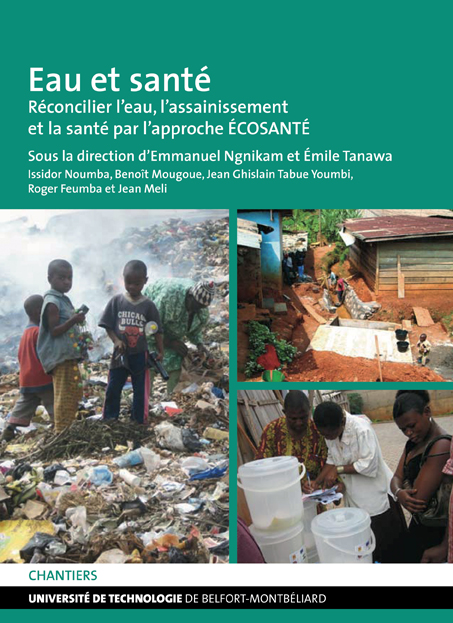
Edited by Emmanuel Ngnikam and Émile Tanawa
Publication date:July 2011
. Dimensions: 16x 22 cm / 336 pages
Paperback:20 euros – ISBN 978-2-914279-49-9
PDF:14 euros – ISBN 978-2-914279-50-5
Content: Thisbook, edited by two renowned scholars, Emmanuel Ngnikam (Dr.) and Émile Tanawa (Prof.), presents the results of a scientific study conducted from 2003 to 2009. It will be of interest to anyone in the fields of the environment and health who is committed to applying a sustainable development approach to their projects and programs.
The authors demonstrate how, through an ECOSANTÉ approach, researchers, authorities, and citizens are better equipped to organize themselves to address the challenges posed by improving the sanitation of their living environments and protecting children’s health. Researchers and development actors can thus acquire highly relevant expertise.
The key links between water, sanitation, and health are established. First, the multiple links between sanitation and the quality of groundwater, from which populations in densely populated urban neighborhoods draw most of their drinking water. Second, the practices and behaviors of communities that influence the quality of the water they consume. Third, environmental, economic, and social factors, which are major determinants of the health status of children under five in informal settlements in major cities such as Yaoundé. By changing practices and behaviors within households, children’s health is significantly improved.
The approach implemented in this study has generated both technological and social innovations that have facilitated water storage and treatment in the home. Some of these innovations earned the team the Grand Prize in the “Water for All” competition organized by the SUEZ Environment Foundation of the Institut de France in 2010.
Authors:Roger Feumba, Jean Meli, Benoît Mougoue, Emmanuel Ngnikam, Issidor Noumba, Émile Tanawa, Jean Ghislain Tabue Youmbi
Press release about this team and its work:
· SUEZ ENVIRONNEMENT FOUNDATION—WATER FOR ALL:download the document
Khouribga
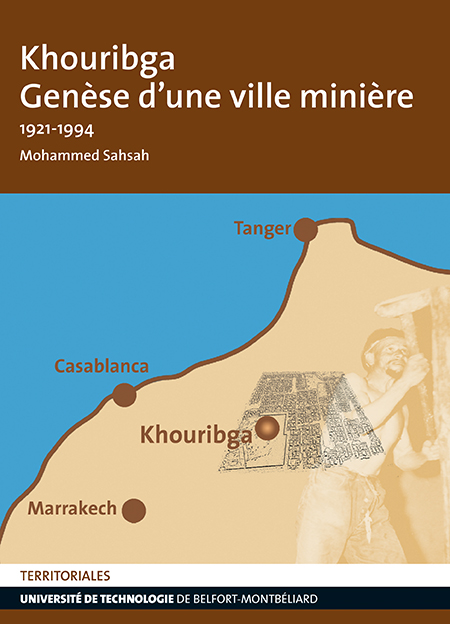
By Mohammed Sahsah
Publication Date:January 2010
. Dimensions: 16x 22 cm / 256 pages
Paperback:18 euros – ISBN 978-2-914279-45-1
Audience:University, community, and public libraries; residents of French-speaking mining regions; historians and sociologists (specializing in technology, labor, urban studies, etc.); urban planning organizations; and the general public with an interest in the subject.
Content:The city of Khouribga emerged in a desert region of Morocco when the OCP (Office Chérifien des Phosphates) began mining the local phosphate deposit under French control. The OCP organized the urban landscape, leaving its mark on housing, sociocultural relations, and neighborhoods, which it divided along ethnic lines in a city split between indigenous neighborhoods and a European (primarily French) enclave, separated by a railroad track.
Today, it is a regional capital with a population exceeding 160,000. Between the French protectorate and independence, the site became the world’s largest phosphate deposit, an industry that spurred the development of related economic activities. Technical changes are described in detail, as is urban life (layout, daily life, changes). A young, male working-class population has gradually transformed into a family-oriented, urban, and diverse population, though one that remains dependent on phosphate. With several possible futures ahead.
Author:Mohammed Sahsah
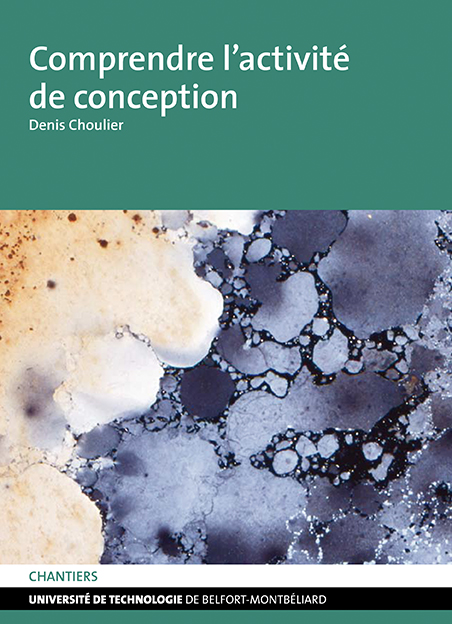
Understanding the Design Process
Denis Choulier
Publication date:January 2009
. Format: 16x 22 cm / 176 pages
Paperback:15 euros – ISBN 978-2-914279-41-3
Audience:Engineering students / Educators and professionals in technical product design
Content: Designis a common, even widespread, activity. Yet it remains largely misunderstood and is not underpinned by any overarching explanatory theory—particularly one that describes what designers do when seeking to propose ideas for a new product. The aim of this book is to provide “insights” into the subject. It is divided into two parts:
This book is intended for engineering students, as well as instructors and professionals in the field of technical product design. It aims to help them observe, understand, and then manage their work. It is also intended for those who, while not directly involved in design, wish to gain a better understanding of the underlying principles.
Author:Denis Choulier
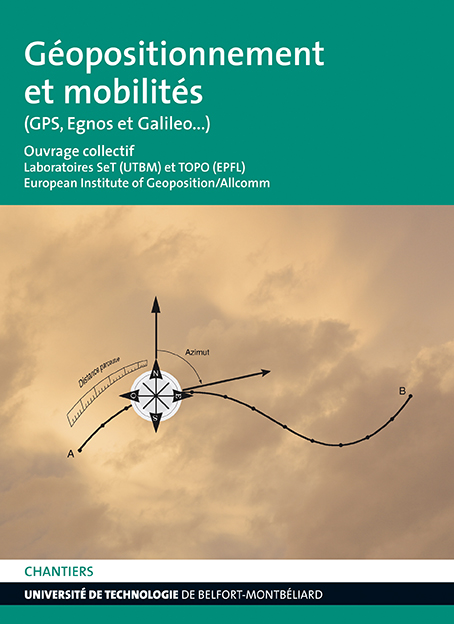
Geolocation and Mobility
Edited by Maxime Wack, Ahmed Nait-Sidi-Moh, Jaafar Gaber, Pierre-Yves Gilliéron, and Yves Alexandre
Publication Date:September 2009
. Dimensions: 16x 22 cm / 416 pages
Paperback:20 euros – ISBN 978-2-914279-40-6
Content: Adigital revolution is underway with the development of satellite positioning. Originally developed for military use, it is now at the heart of numerous civilian applications. Following the success of GPS, the European Union is rolling out Galileo (a constellation of 30 satellites set to be operational in 2013) and has an interim system, EGNOS, which already offers performance superior to that of GPS (for example, in civil aviation).
This book provides an overview of the potential and challenges of geopositioning services, the various systems and IT solutions involved, as well as legal, security, and cartographic aspects. It presents applications in mobility and sustainable transportation: road traffic monitoring, real-time tracking of sensitive shipments, mobile networks, travel analysis, assisted pedestrian navigation, and more.
Authors:Yves Alexandre, Didier Assossou, Alexis Bacelar, Mohamed Bakhouya, Véronique Chazal, Nathanaël Cottin, Arnaud de La Fortelle, Thierry Delot, Michael Flamm, Jaafar Gaber, Pierre-Yves Gilliéron, Patrick Gendre, Jérôme Legenne, Philippe Marchal, Dominique von der Mühll, Ahmed Nait-Sidi-Moh, Thierry Piette-Coudol, Fabrice Reclus, Thomas Röhr, Ana Roxin, Monica Ruzicka-Rossier, Maxime Wack
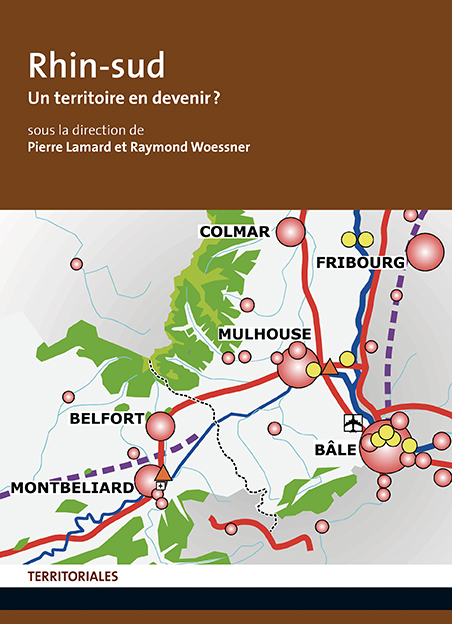
Southern Rhine
Edited by Pierre Lamard and Raymond Woessner
Publication Date:September 2007
. Dimensions: 16x 22 cm / 288 pages
Paperback + PDF:Available online for free – ISBN 978-2-914279-36-9
Audience:Geography; industrial heritage; economics; land-use planning; elected officials
Content:For a century, a project to foster regional integration has been taking shape between Basel, Mulhouse, and Belfort-Montbéliard—precisely where France, Germany, and Switzerland meet.
Today, in the spirit of a Europe of regions, the concept of a “Rhine-South” territory is taking on new forms: academic and cultural exchanges, an automotive hub, highways, high-speed rail (TGV), and Euro-Airport.
Here you will find a selection of analyses drawn from roundtable discussions held in Mulhouse since 2001 on what unites northern Franche-Comté and southern Alsace: industrial heritage and future challenges facing industry, technical research and training, new networks, local development… Is a new territorial entity taking shape along these borders?
Authors: Michel Brandner, Michel Cotte, M’Hamed Dif, Pierre Fluck, Bruno Fontalirand, Marina Gasnier, Jean-Alain Heraud, Laurent Kammerer, Pierre Lamard, Jean-Pierre Micaëlli, Serge Ormaux, Fabienne Picard, Bernard Reitel, Nathalie Rodet-Kroichvili, Frédéric Santamaria, Hanz Wirz, Raymond Woessner
Co-published by:Belfort-Montbéliard Universityof Technology and University of Haute-Alsace
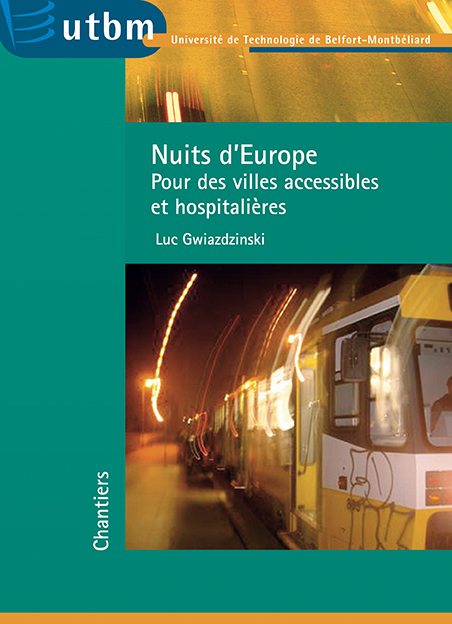
Nights of Europe
By Luc Gwiazdzinski
Published: March2007
. Dimensions: 16x 22 cm / 216 pages
Paperback:20 euros – ISBN 978-2-914279-29-1
Content: Sincethe early 1990s, we have witnessed a gradual takeover of the urban night by economic activities. Faced with growing demand for both recreational and work-related activities, European cities have had to rethink their transportation networks. Despite obstacles such as lower profitability, higher costs, and issues related to vandalism or safety concerns, public authorities, organizations, and businesses have developed a new range of nighttime services. Often piloted during special events (such as “White Nights”...), these services are helping to reshape a new nighttime space for work and leisure and to define a new form of urban life. Their intermodal and multi-scale development, the revitalization of transit hubs, and improved information and comfort can contribute to the emergence of more accessible and welcoming cities. The night certainly has a lot to teach the day.
Author:Luc Gwiazdzinski
African Cities and Their Waste Problems

By Emmanuel Ngnikam and Emile Tanawa
Publication Date:December 2006
. Dimensions: 16x 22 cm / 288 pages
Paperback:Out of print, available online for free – ISBN 978-2-914279-32-1
Content:Waste managementremains a problem in African cities. Governments, local elected officials, technical experts, and residents are seeking ways to keep cities clean and protect the environment.
Intended for students, teachers, and city administrators, this book is based on fieldwork conducted from 1992 to 2004 in about ten cities in West and Central Africa. Its analyses and proposals also apply to other countries in the tropics.
It analyzes waste management and treatment, policies and their financing, and finally the institutional framework in Africa.
The greatest challenge for city managers is choosing which system to implement given environmental, technological, economic, and even cultural constraints. This book demonstrates that the life cycle assessment (LCA) method can be used to identify the most “eco-friendly” system based on six environmental criteria: depletion of natural resources, greenhouse effect, eutrophication, acidification, toxic and ecotoxic impacts, and finally, the volume of waste in landfills.
Authors:Emmanuel Ngnikam, Emile Tanawa