read more
students
Alumni
nationalities
partner companies
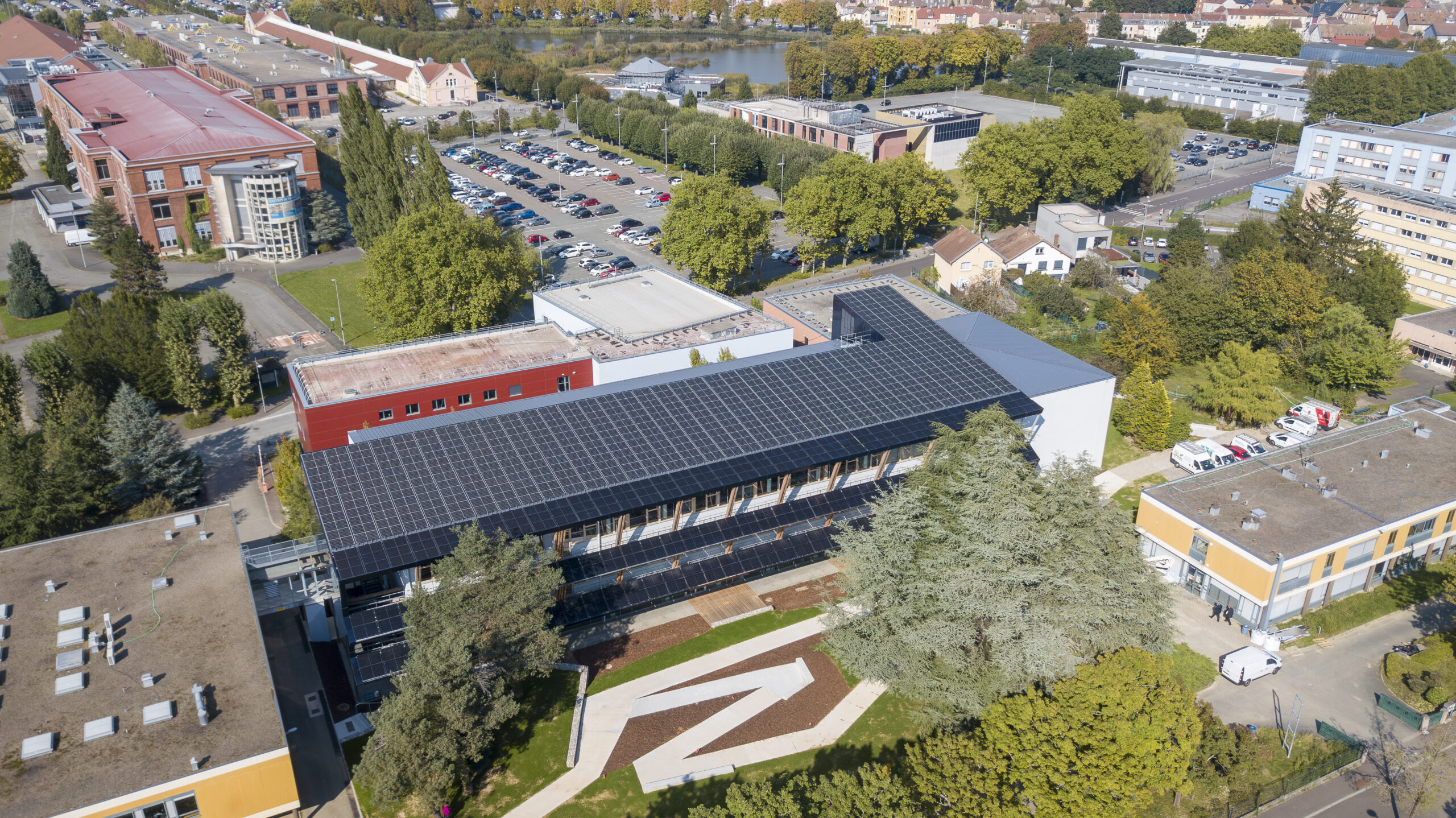
Founded in 1999, the University of Technology of Belfort-Montbéliard (UTBM) trains innovative engineers who are open to the world and ready to tackle the technological, economic, and environmental challenges of tomorrow. As a member of the Network of Universities of Technology, UTBM offers a first-rate education that combines scientific rigor, close ties to industry, and an international outlook.
Based in Bourgogne-Franche-Comté, UTBM is built on a strong culture of research, innovation, and experimentation. Its educational model, inspired by North American universities, places the student at the center of their academic journey, in an environment that fosters initiative, creativity, and engagement.
Joining UTBM means becoming part of a dynamic and ambitious community that is engaged with the major challenges of the 21st century.
At the heart of UTBM’s educational program lies a rigorous, career-oriented curriculum focused on innovation, research, and industry, designed to train engineers capable of thriving in a constantly changing world.
read more
Specialized degree programs available after completing a bachelor’s degree, combining academic excellence, technological expertise, and an international focus.
read more
A path to scientific excellence: under the guidance of top-tier researchers, UTBM doctoral students conduct innovative research in renowned laboratories.
read more
Designed for working professionals, UTBM’s continuing education program allows individuals to update or expand their skills throughout their careers.
read more
A unique training program designed to address the challenges of the energy transition by training experts in the hydrogen sector, in close collaboration with industry stakeholders.
read more
An innovation lab that combines design, engineering, and automotive performance. A one-of-a-kind facility for designing prototypes of exceptional vehicles under real-world conditions.
read more
My time at UTBM, in the Department of Mechanical Engineering and Ergonomics, allowed me to develop strong technical and interpersonal skills that are essential for a career in engineering. Starting with my final-year internship, I was able to apply the methods I had learned to a variety of products, particularly in the textile industry, demonstrating their adaptability to product design as a whole. The many industry professionals who taught the course also gave me a practical understanding of the profession.
The combination of mechanical engineering, ergonomics, and eco-design allowed me to quickly bring specialized skills to my employer, Decathlon. The collaborative projects included in the curriculum helped me become more independent in project management, while my international internships improved my English and my ability to collaborate effectively with international partners.
Graduate in mechanical engineering and ergonomics
After earning a DUT in Computer Science, I chose the apprenticeship program to combine a solid theoretical foundation with hands-on professional experience. The well-structured work-study schedule makes it easy to balance classes and work. The program provides a strong scientific foundation and broad coverage of information systems
, while allowing students to choose a specialized track—AI, cybersecurity, or virtual reality—starting in the third year. Real-world projects foster the development of advanced technical skills and mastery of project management.
In the workplace, the assignments entrusted to me involve real responsibilities that accelerate my professional growth. I highly recommend this program to anyone seeking a comprehensive and innovative path to success in computer engineering.
Computer Engineering Graduate
I chose UTBM for its work-study engineering program in industrial logistics, a rapidly growing field. Through my work-study placement in the automotive industry, I worked on a variety of projects, including production planning, logistics re-in-sourcing, and crisis management for spare parts. These experiences allowed me to put the skills I acquired in supply chain management and continuous improvement into practice.
After completing my training, I worked in the automotive, food, and pharmaceutical industries. Today, I am the industrial site manager at Pierre Fabre, I am overseeing the automation and transformation of a distribution center. This training program was a real springboard for my career.
Graduate with a degree in Industrial Logistics (apprenticeship program)