ARTEMIS - Accelerated Discovery and Development of Smart Materials and Active Structures Through 4D Printing
Abstract
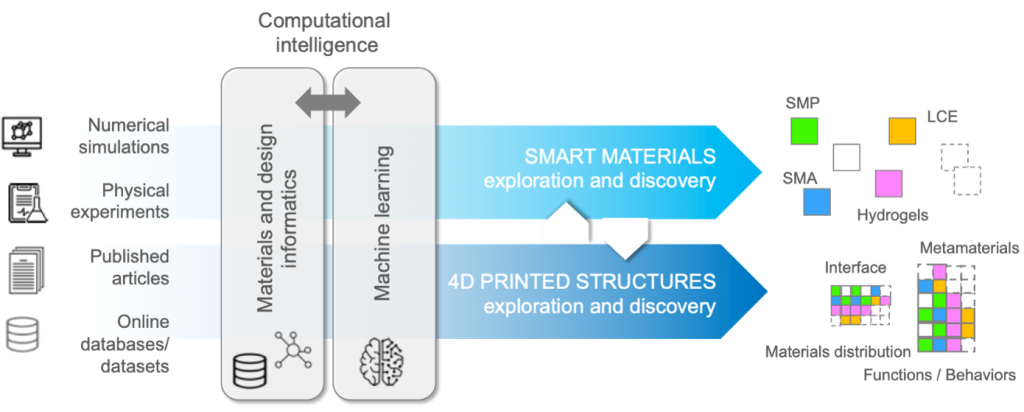
Introduced in 2013 by the Massachusetts Institute of Technology and the University of Colorado (U.S.), 4D printing combines additive manufacturing and active materials to build physical objects capable of changing their shape and/or properties in response to an energy stimulus. By adding the time parameter to 3D space, the relationship between application requirements and the technological means to meet them becomes more complicated, even complex. In this project, the national consortium will address various research areas, including digital technology (knowledge bases and machine learning related to materials and structures), materials and processes, and forward-looking initiatives (for example, linking 4D printing and biomimicry as a common thread and/or focusing on smart materials). Meeting the needs identified in this “technological leap” should [finally] enable the field of 4D printing to transition from an academic role to industrial applications.
Objectives
The main objectives of the project are (i) the construction of a comprehensive database with a neuro-symbolic artificial intelligence architecture (a multiscale or multidomain ontology covering smart materials and 4D-printed structures, coupled with machine learning models), (ii) the synthesis and formulation of the next generation of printable smart materials, with a particular focus on hydrogels, LCE (liquid crystal elastomers), SMPs (shape-memory polymers), and SMAs (shape-memory alloys), and (iii) the design and hybrid fabrication/assembly of selected smart materials and multi-material structures, with distributions of active and passive materials, through stimulation optimization to achieve a desired shape transformation.
- Project Leader(s): Frédéric DEMOLY
- Partners: ICB (UTBM), ICGM (University of Montpellier), IRAMIS/LSI (École Polytechnique), CEA Liten, CEA Tech Grand-Est, CEA List.
- Funding: France 2030, PEPR, DIADEM; ANR Grant: 1.5 M€
- Duration: 2023–2027
- Expected results: neuro-symbolic AI, new active materials, new transformable structures, and a demonstrator for various application sectors.
VOXWRITE - Direct voxel writing based on microfluidic multi-material 4D printing
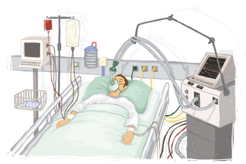
VOXWRITE aims to develop an innovative microfluidic-based additive manufacturing (AM) technique capable of depositing polymerizable microdroplets that encapsulate multiple materials with variable spatial resolutions. This technological advancement offers flexibility and accuracy in constructing complex structures and objects with enhanced functionalities while maintaining a production rate comparable to that of existing AM techniques. The scientific challenge lies in depositing heterogeneous materials at different locations on the object to enhance its performance and/or introduce new capabilities. The most advanced industrial sectors, such as biomedical, automotive, and aerospace, are moving toward developing transformable or adaptive devices that can change shape to better suit their intended use. In the field of AM, these innovative solutions can be addressed using active or smart materials and energy stimuli under the umbrella of 4D printing. The proposed technique will then be developed within the context of multi-material 4D printing, with an illustrative use case being a drug delivery system with time-controlled, shape-changing capabilities for the biomedical industry.
Objectives
The research objectives focus on (1) the creation and shaping of calibrated microdroplets containing active, passive, and/or filled polymerizable resins, and the definition of the associated encapsulation process(es); (2) the development of a microdroplet deposition strategy and localized energy source(s) to ensure their adhesion to the object being printed; and (3) the design, assembly, and automation of an integrated microfluidic 3D printing system.
- Project leader(s): Frédéric DEMOLY.
- Partners: ICB (UTBM), LMSI-1 (Swiss Federal Institute of Technology in Lausanne).
- Funding: ANR PRCI, ANR Grant: 463 k€
- Duration: 2024–2027.
- Expected Results: A Voxel-Writing Machine Using Microfluidics
XHUB | eXtra HUB: Autonomous Logistics Platforms
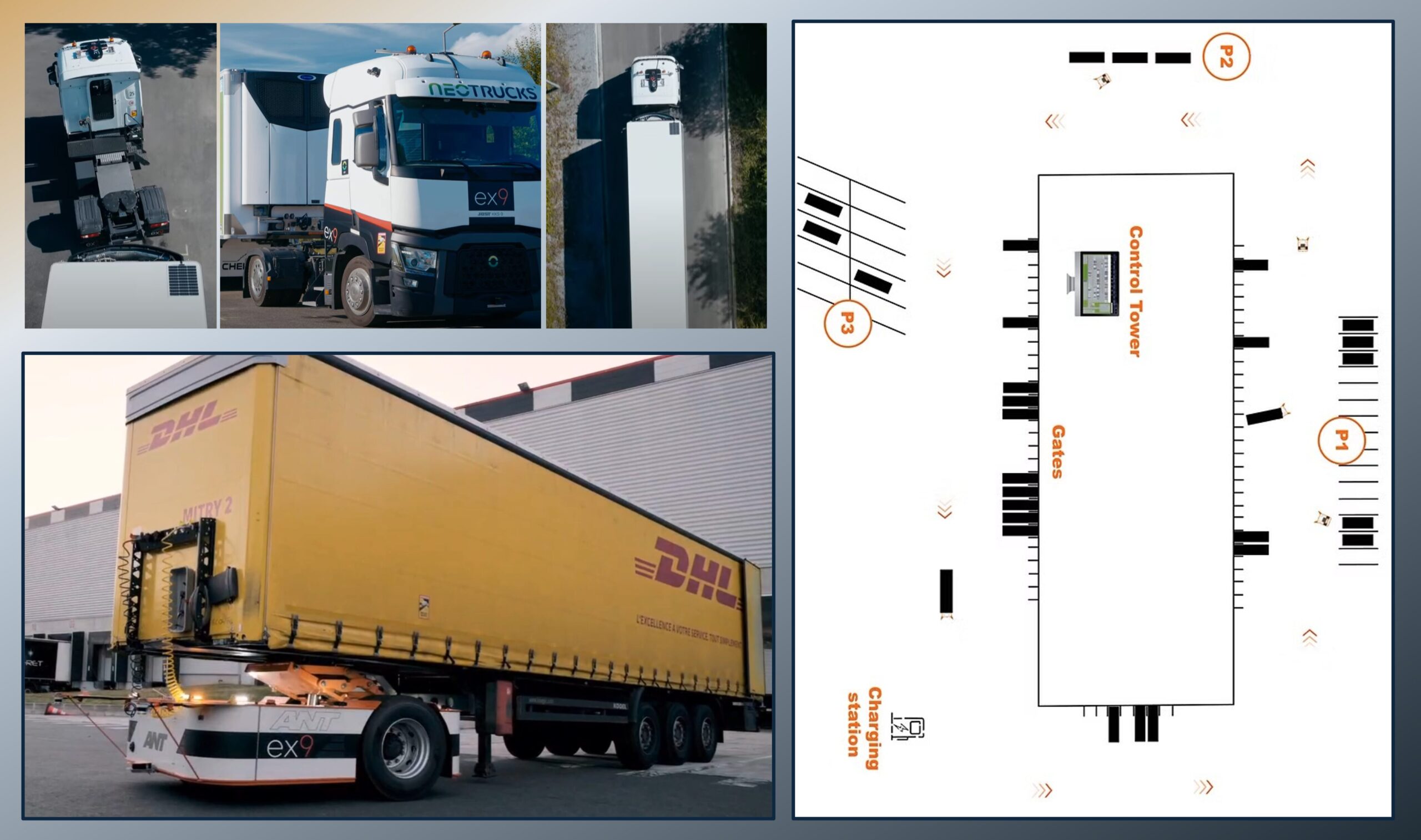
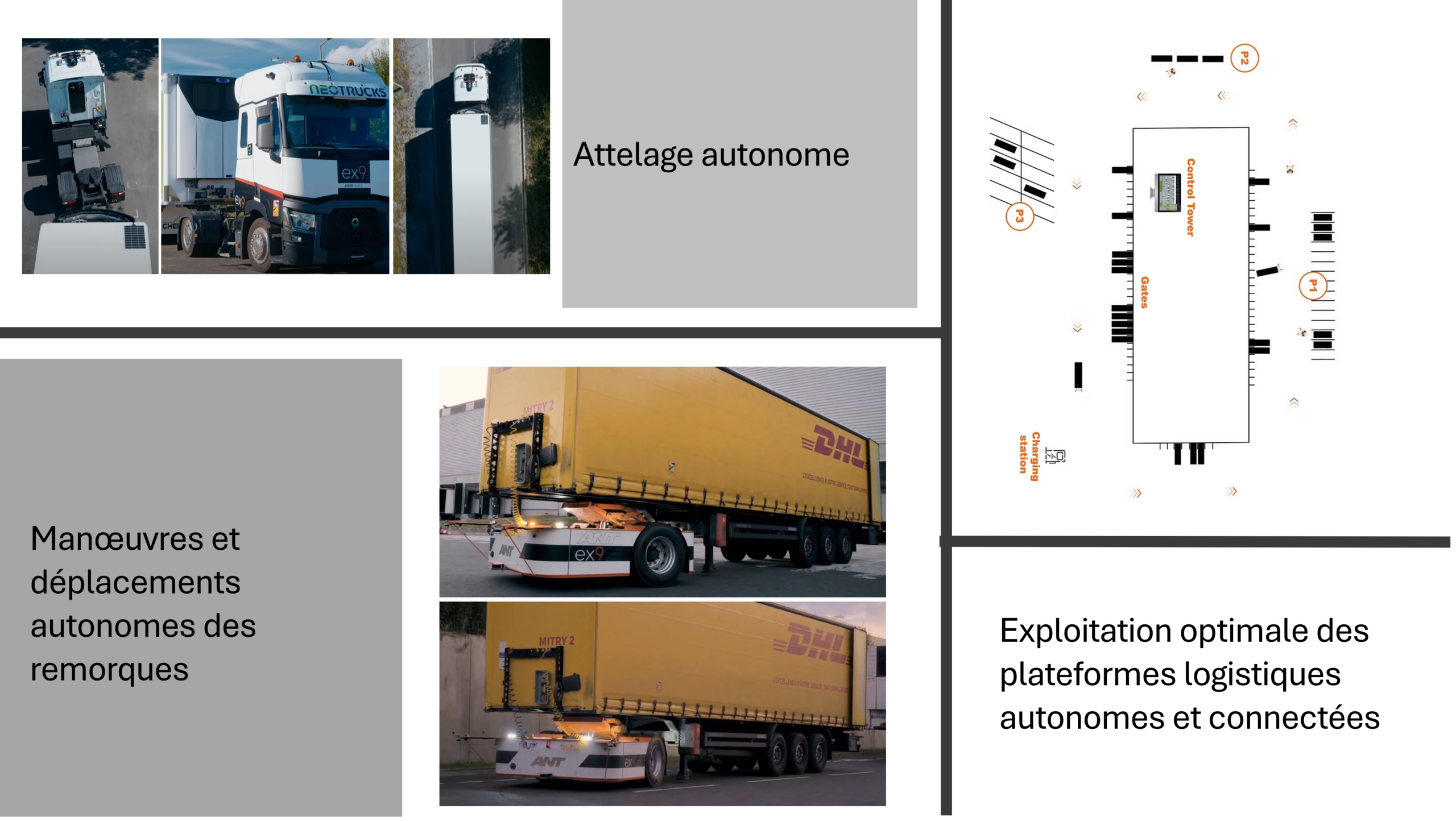
The xHUB project aims to automate the movement of trailers using autonomous and eco-friendly tractor robots within warehouses and logistics hubs (EPL). It takes the operational environment into precise account by combining autonomous driving with various technological components that ensure feasibility, safety, and tangible benefits when deploying the tractor robots. Key elements include automated battery charging and coupling, an augmented and connected perception system to cover blind spots, and a high-performance operations management and monitoring system.
Objectives
- Automate material-handling operations within EPLs using autonomous tractor robots.
- Reduce the carbon footprint of public lighting systems by replacing diesel trucks with electric, connected, and autonomous robotic tractors.
- Improve safety and the sector's appeal by reducing risks for operators and addressing the driver shortage.
- Optimize logistics flows and space utilization to reduce costs and improve operational efficiency.
Expected Results
- Deployment of a working prototype in a real-world setting.
- Implementation of an industrialization process for the mass production of robotic tractors.
- Improving EPL performance through the automation of material-handling tasks (coupling, reloading, and route optimization).
- Development of an innovative technological solution that can be scaled up for industrial production, featuring user-friendly interfaces and advanced connectivity.
- Strengthening France's technological competitiveness with a solution that can be exported internationally.
- Project leaders:
Abbas-Turki Abdeljalil – UTBM
- Partners :
- National Public Institution for Science, Culture, and Professional Training: IMT Mines Albi
- Companies: AVAIRIX, DHL Logistics, Elonroad, Neotrucks, Orange, Outsight
- Industrial Incubator and Accelerator: Paris-Saclay Hardware Accelerator
- Funding: ROBOTIC TRANSFER CHALLENGE, ANR, . Current phase: 3.5 M€
- Duration: 2 years for the technology transfer phase and 1 year for the industrialization phase.