Home / Publications
Since 2003, the Publishing Division has been developing a program of scientific, educational, and cultural publishing aimed at promoting the research and educational programs conducted at UTBM, as well as those outside the institution. The books are available in all bookstores throughout France and through all mail-order retailers.
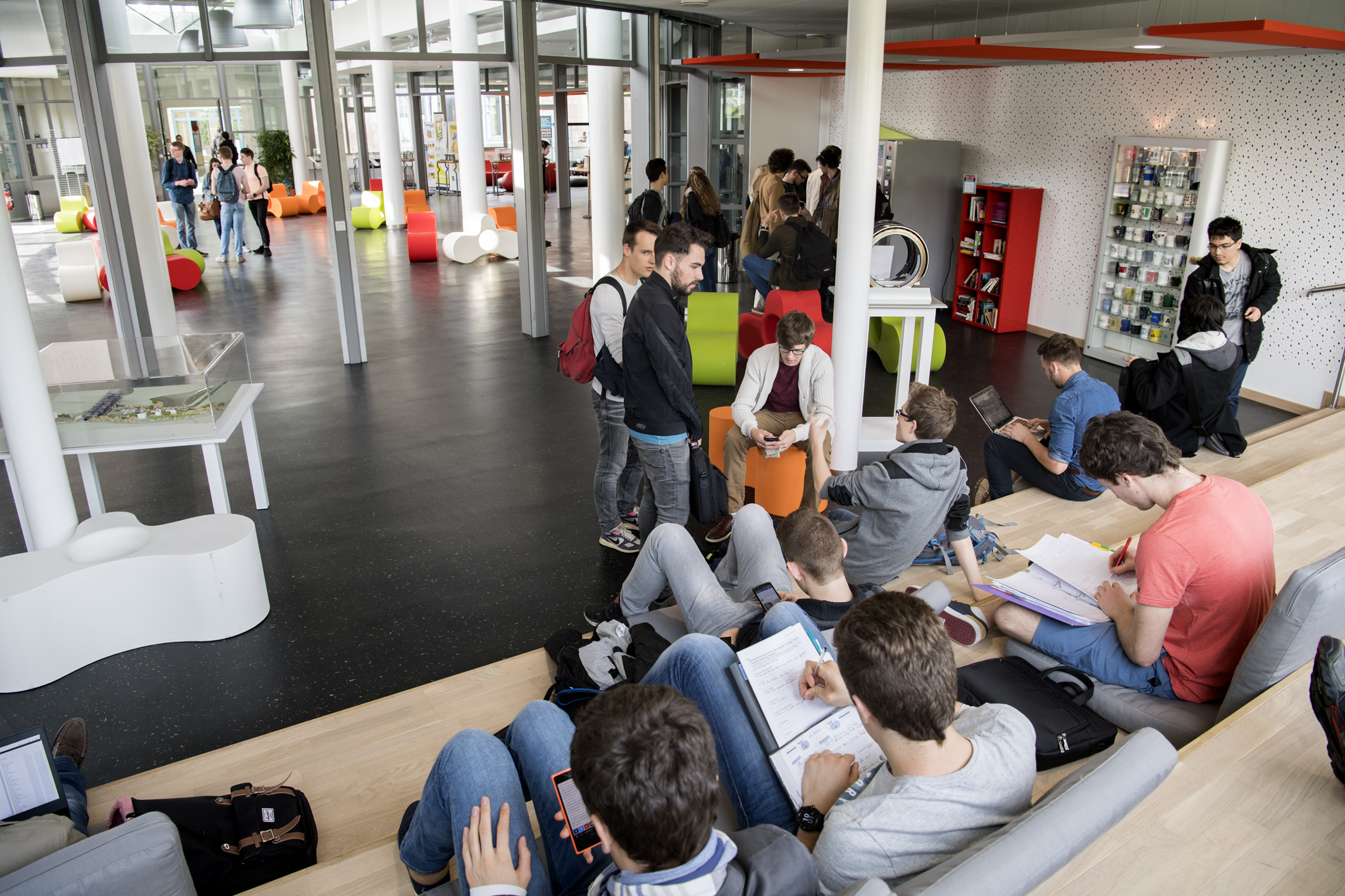
At the Belfort-Montbéliard University of Technology—one of three universities of this type in France, along with Compiègne and Troyes—technology is not limited to technical knowledge. Rather, it is defined as a scientific approach to these techniques, an approach that is also grounded in the humanities.
From its inception, UTBM has been committed to developing a publishing program to make available to everyone—faculty members, researchers, engineers, students, and the general public—a selection of scientific, educational, and cultural works by its researchers, faculty, and students, as well as research conducted outside its walls.
The print catalog features our publications; each one is described in more detail on our website:
. Our books are available in all bookstores, and most of those that are out of print can be accessed for free on our website in digital format.
RECITS Journal No. 12 - 2025
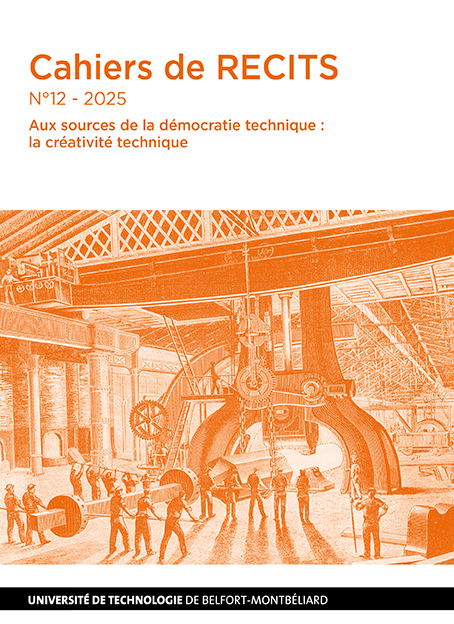
The Origins of Technical Democracy: Technical Creativity
Publication Date:June 2025
Format:16 x 22 cm / 280 pages
Paperback:21 euros – ISBN 979-10-91901-74-1
PDF:15 euros – ISBN 979-10-91901-75-8
ePUB:15 euros – ISBN 979-10-91901-76-5
Issue No. 12 of*Cahiers de RECITS* includes:
PART I. What Kind of Technical Democracy for Tomorrow?
• Luc Rojas: *Le Journal des mines*, a Tool for Rationalizing the Underground Environment, or the Struggle of a Major State Technical Corps Against Landowners’ Illegal Mining (1794–1815)
• Francesca Bray and Aurélie Brayet: Technical Democracy and Constructive Consumption: Two Approaches to Understanding the Phenomenon of the “Arts Ménagers” in Postwar France?
• Vincent Dray: Constructing Technology as One Creates Art. Genesis, Contexts, and Means of an Experiment in Technical Creativity
• Noémie Boeglin: The Story of a Fictional Invention: Lou Swift’s Solar Cells in *Ecotopia Emerging*
• Guillaume Bagnolini: Biohacking or the Renewal of Technical Democracy: Between Dreams and Disillusionment?
• Van Troi Tran: Experiencing the Meal of the Future at World’s Fairs: Shanghai 2010, Milan 2015
PART II. Sustainable Mobility in Medium-Sized Cities
• Ali Hasan: Public Policy on Mobility in Medium-Sized Cities in the Champagne-Ardenne Region. Mobility at the Intersection of Institutional Changes and Urban Development Projects
• Teddy Delaunay: From Digital Technology to the Local Level? When Carpooling Is Integrated into Public Transportation Network Planning. The case of the “Covoit’ici” pilot project
• Abdelhakim Kebiche: Local Challenges of the Sétif Tramway; Toward a “City Project” to Build the City of Tomorrow?
• Magali Pierre and Gaëtan Brisepierre: The Decision to Install Electric Vehicle Charging Stations in Condominiums: The Paradox of the “Right to a Charging Port” at the Dawn of the Mass Adoption of Electric Vehicles
Industrial Areas in Urban Settings
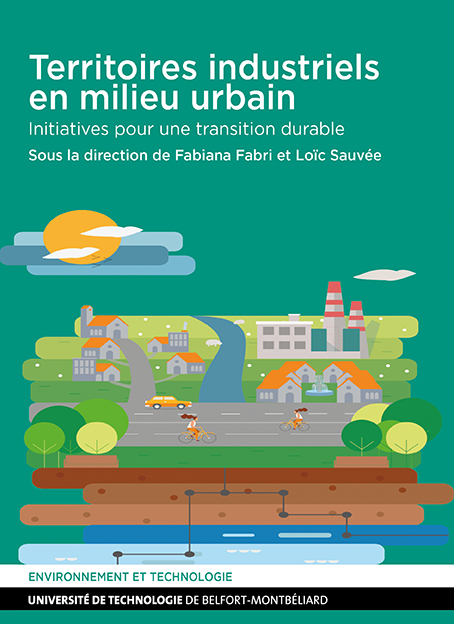
Initiatives for a Sustainable Transition
Edited by Fabiana Fabri and Loïc Sauvée
Publication Date: April2025
; Dimensions: 16x 22 cm / 206 pages
PDFbook:13 euros – ISBN 979-10-91901-80-2
ePUB book:13 euros – ISBN 979-10-91901-81-9
Content: Ata time when there is a dual need to both reindustrialize our regions and promote a transformation of cities that combines social inclusion and environmental responsibility, this book offers a reflective look at historically industrialized cities in transition, through initiatives carried out in Rouen, Normandy, and beyond. With this in mind, the first seminar of the UsinoVerT Usines & Territoires Chair was held in Rouen on November 17, 2023, and this book was developed based on that event.
This book is based on two observations:
I. The first observation concerns the need to pay attention to the uniqueness of local contexts and the importance of territorial roots, which consist of historical, cultural, and geographic landmarks, as well as the collective imagination—that is, people’s perception of a place, its role, its mission, and the meaning it is meant to give to the territory. It is by focusing on this local perspective and the human scale that we will be able to better grasp the complexity of the relationships between industrial activities and the urban environment. The idea is to explore innovative initiatives to develop activities that strengthen and revitalize the connections between industrial, environmental, and social fabrics, by relying on local stakeholders, in order to become part of a networked world.
II. The second observation highlights the value of interdisciplinary and systemic approaches to better understand the chances of success for initiatives aimed at creating or reestablishing the connection between factories and their local communities, and making the factory of the future an integral part of its environment in every respect: scientific studies on environmental impacts, assessments of rehabilitation and redevelopment projects, and societal integration through new forums for consultation and collaboration among industry, citizens, and public authorities.
To this end, this book brings together the perspectives of experts, researchers, project leaders, and those sharing their experiences, as well as industry representatives and citizens—and, more broadly, all stakeholders committed to restoring industrial areas to a prominent role in the cities of tomorrow, both economically and environmentally, and in terms of their contribution to more sustainable and resilient communities.
Authors: AnneBarbillon, Alioune Badara Dabo, Fabiana Fabri, Simon Edelblutte, Stéphane Firmin, Corinne Gendron, Caroline Granier, Caroline Kamaté, Jean-Marc Pitte, Loïc Sauvée, Marc Sénant.
Keywords: City , sustainable development, industrial area, transition, innovation, sustainable city, industrial environments, sustainable urban transition.
Hydrogen Through the Lens of the Humanities and Social Sciences
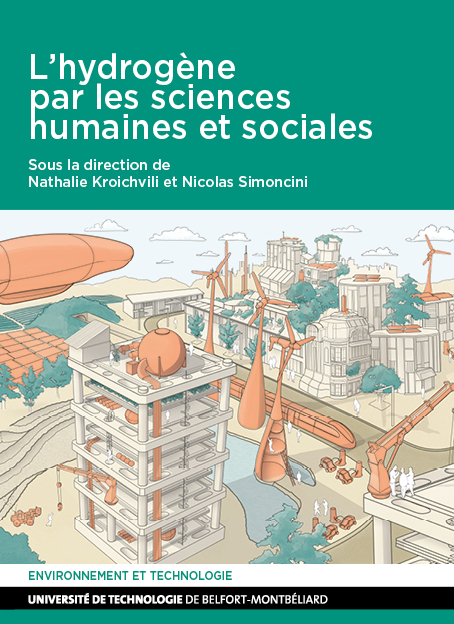
Edited by Nathalie Kroichvili and Nicolas Simoncini
Publication Date: April2025
. Dimensions: 16x 22 cm / 304 pages
Paperback:19 euros – ISBN 979-10-91901-77-2
PDF:13 euros – ISBN 979-10-91901-78-9
ePUB:13 euros – ISBN 979-10-91901-79-6
Content: Hydrogenis now considered by many countries, including France, to be a key chemical element for achieving the energy transition. However, it is often perceived as a purely technical issue to be resolved in isolation within the natural and engineering sciences, with the humanities and social sciences only coming into play afterward. Bringing together work from several disciplines, this book invites readers to shift their perspective. It aims, on the one hand, to explore the many facets of hydrogen—technical as well as historical, social, economic, political, and legal—and, on the other hand, to highlight the potential of the humanities and social sciences to contribute to debates on hydrogen’s role in our contemporary societies, going beyond the simple issues of social acceptability and economic sustainability to which these fields are too often reduced.
Authors: AntoineAggeri, Rudy Amand, Elodie Annamayer, Nuno Bento, Vincent Bertrand, Louis De Fontenelle, Michaël Fernandez, Clair Juilliet, Nathalie Kroichvilli, Louis Lasnon, Nicolas Simoncini, Pierre Teissier, Mathieu Triclot.
Keywords: Hydrogen, humanities and social sciences, interdisciplinarity, energy transition, science and technology.
UTC, or The Saga of the Technologists
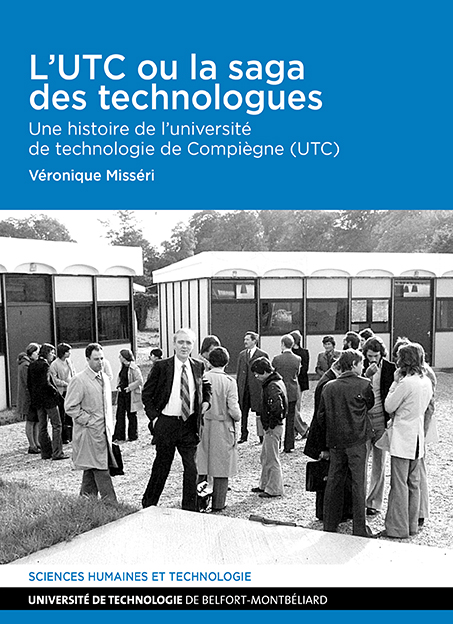
Véronique Misséri
Publication Date: December2024
. Dimensions: 16x 22 cm / 672 pages
Paperback:25 euros – ISBN 979-10-91901-69-7
PDF:17 euros – ISBN 979-10-91901-70-3
ePUB:17 euros – ISBN 979-10-91901-71-0
Content: Whydid students choose UTC in 1973, when it had no campus and offered no degree? Not because of a dream, but perhaps because of the promise of being the architects of change, of bringing it about, of staying ahead in a world where technological evolution is transforming social practices and spatiotemporal frameworks… UTC champions technology at the highest level of higher education and research. Neither a school nor a science university—but an institutional hybrid—UTC fosters convergence between engineering and research, academia and industry, through practical action. Echoing the urgent need to transform institutions that have fallen out of step with the dynamics of society, it challenges the traditions of the French system. UTC is an Active Convergence Unit (UAC)—that is, an institution that transforms its environment through unexpected collaborations. It has emerged with a mission of educational experimentation, directly aligned with the evolution of public policy.
This story is, first and foremost, one of a collective endeavor that is gradually establishing technological research and the training of “technologists” as integral components of innovation ecosystems. Academic and institutional entrepreneurs are working to make this endeavor a success, initially supported by sponsors from industry, politics, the research community, and senior government officials. Conversely, whether through open or covert opposition or more diffuse disagreements, the inertia of the academic system hinders the organization’s development, even as it draws inspiration from it. Navigating the tension between organizational innovation, regional integration, and institutional legitimacy (the phenomenon of isomorphism…), it appears to follow a cycle toward becoming an intermediary institution. It is this saga that is revealed through testimonies, archives, and press coverage… The study focused on the institution’s emergence up to around 2005, after which it explored only a few avenues in an attempt to bring this first cycle of development to a close.
Keywords: technology, engineering, technology research, University of Technology, engineering school, convergence, active unit, innovation, ecosystem, institutional legitimacy, isomorphism, organization, university configuration, meso-sociological approach.
Teaching Design: Challenges for Democracy
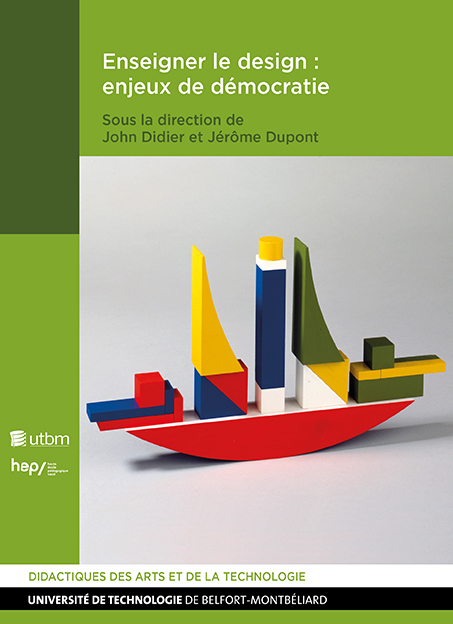
Edited by John Didier and Jérôme Dupont
Publication Date: December2024
; Dimensions: 16x 22 cm / 288 pages
Paperback:20 euros – ISBN 979-10-91901-66-6
PDF:14 euros – ISBN 979-10-91901-67-3
ePUB:14 euros – ISBN 979-10-91901-68-0
Content: Thiscollective work explores the field of design by adopting a multidisciplinary approach and examining its epistemological foundations. This contribution to design focuses on its lessons—and more specifically, on the skills and values essential to any democratic system. From this perspective, the various chapters present discussions on the need to educate citizens capable of taking action in our democracies, which are steeped in technical challenges. In this sense, teaching design requires reexamining the training of designers and, consequently, the act of design itself as a profoundly democratic endeavor.
This activity, considered complex, lies at the heart of design education. This book explores how to learn it by examining the challenges of a technical democracy and delving deeper into its potential skills and values. These contribute to the development of a civic mindset geared toward designing artifacts and technical systems.
Authors: PierreBaumann; Gwenaëlle Bertrand; Suzanne Boulet; Marcelo Falcon Roberto; Maxime Favard; Joëlle Forest; Claire Griffon; Anja Küttel; Marie-Pierre Labrie; Martin Lalonde; Mathieu Laporte; Pierre Litzler; Guillaume Massy; Christophe Moineau; Émeline Roy; Apolline Torregrossa; Eric Tortochot; Frédérique Vuille
Keywords: Design, Education, Training, Technical Democracy, Conceptualization, Epistemology, Pedagogy, Did
Caring for the Environment
Technology Design Manual
Edited by Mathieu Triclot
This book was published with the support of the UT Group
Publication Date: April2024
. Dimensions: 16x 24 cm / 458 pages
Paperback:28 euros – ISBN 978-2-37361-447-3
PDF:not available for purchase– ISBN 978-2-37361-448-0
Content: Designingmeans creating new realities that will inevitably have an impact on a wide variety of environments—both natural and social—and across different spatial and temporal scales. Engineers, whether they like it or not, bear responsibility for these effects, even though uncertainty is a constant feature of their work: very often, they cannot anticipate from the outset the consequences of the technologies they design and develop. Furthermore, technological design systematically involves issues of values: those that drive the engineer—of which he or she may not necessarily be aware, yet which can nonetheless decisively guide his or her design choices; as well as the values that shape the environments in which the engineer, through the technologies he deploys, brings about effects—and which he may thereby disrupt, weaken, or threaten. Given this uncertainty regarding the effects and the values at stake, how can the engineer fulfill his or her responsibility? Can we help him or her strengthen the ability to analyze these environments and the values that organize them, as well as to analyze his or her own values and the extent of his or her power to act?
This textbook aims to offer engineers some guidance. Developed by a group of faculty members and researchers in the humanities and social sciences—many of whom are affiliated with universities of technology—it is primarily intended for engineering students who find themselves facing pressing ecological and democratic challenges. The handbook offers them an original approach to technological design, centered on the concept of “environment,” which is better suited to addressing major contemporary challenges. The goal is to take concrete steps toward transforming engineering and to encourage engineers to change their perspective on technological design. To achieve this, it is imperative to renew the knowledge and methodologies employed in design.
A textbook is not a manifesto: the aim here is not to offer yet another critique of technology, but rather to concretely transform engineering practices and to propose an alternative design model guided by care for natural and human environments. To achieve this, it is necessary to thoroughly rethink not only the approach to design contexts but also technology itself, and to break away from preconceptions—such as various forms of technological solutionism, acceptability, and automation—that hinder an understanding of the complexity of technological intervention.
Colonial Industries in an Imperial Context
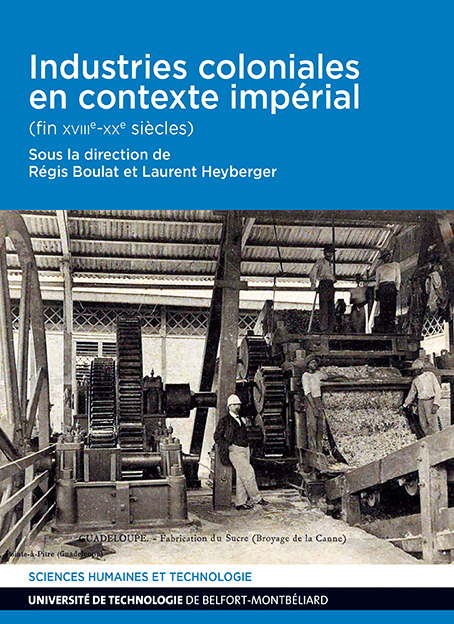
(late18th–20thcenturies)
Edited by Régis Boulat and Laurent Heyberrger
Publication Date: July2023
. Dimensions: 16x 22 cm / 232 pages
Paperback:19 euros – ISBN 979-10-91901-62-8
ePUB book: 13 euros – ISBN 979-10-91901-63-5
PDF book:13 euros – ISBN 979-10-91901-65-9
Bundle (paperback + PDF + ePUB): 21euros – ISBN 979-10-91901-64-2
Content: The“colonial pact” is often considered one of the causes of underdevelopment in certain countries of the Global South today. It requires colonies to supply their mother countries with raw materials in exchange for the latter’s manufactured goods, to such an extent that “industry” and “colony” seem to constitute a historical oxymoron. The pact is generally reconsidered only in times of war, the postwar period, or in preparation for war—that is, in light of geopolitical and military considerations, rather than economic or social ones. In the case of France, it was not until after 1945—well after the British Empire—that, faced with population explosions and the rise of political and social demands from the colonized, political and economic leaders gradually began to question this imbalance and propose new approaches. This book examines this oxymoron, from the first attempt to mechanize the Cuban sugar industry in the late18th centuryto the exploitation of Algerian oil in the 1950s, including the statistical debates of the interwar period on distinguishing between industrial and artisanal production. Corporate strategies, imperial strategies, the management of the colonial workforce, and the social challenges of industrialization are analyzed in particular through new African and American case studies that draw on previously unpublished sources—both private and public, oral and written.
Authors: AlainBELTRAN, Régis BOULAT, Mathilde COCOUAL, Koffi Innocent DIEZOU, Daouda DIOP, Irina GOUZEVITCH, Dmitri GOUZEVITCH, Laurent HEYBERGER, Radouan Andrea MOUNECIF, Béatrice TOUCHELAY, Marie TOUCHELAY, Lucile ZOUYA MIMBANG
Keywords: History, colonization, colonies, industry, France, Africa, South America, labor force.
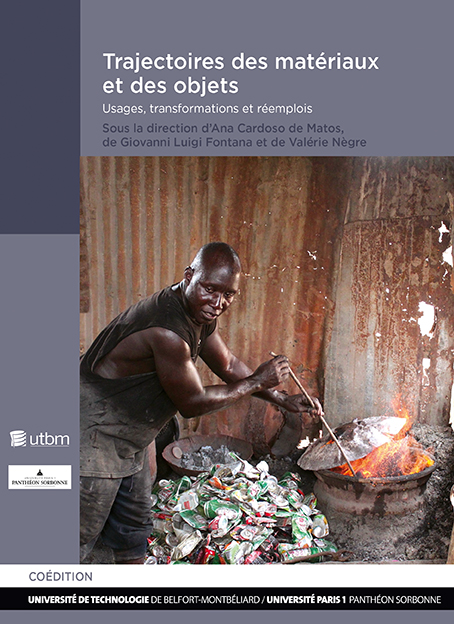
Paths of Materials and Objects
Uses, Transformations, and Repurposing
Edited by Ana Cardoso de Matos, Giovanni Luigi Fontana, and Valérie Nègre
Publication Date: November2022
. Dimensions: 16x 22 cm / 176 pages
Paperback:18 euros – ISBN 979-10-91901-59-8
PDF:13 euros – ISBN 979-10-91901-72-7
ePUB: 13 euros – ISBN 979-10-91901-60-4
Bundle (paperback + PDF + ePUB): 20euros – ISBN 979-10-91901-61-1
Contents:Based on two conferences organized as part of the Erasmus Mundus international master’s program “Techniques, Heritage, and Industrial Territories” by the universities of Paris 1 Panthéon-Sorbonne, Padua, and Évora, this volume addresses two rapidly evolving themes in the fields of the history of technology and cultural heritage.
The first theme concerns practices of maintenance, repair, and reuse. Michel de Certeau’s pioneering research on *The Arts of Doing*, which posits the existence of creative appropriations by consumers, as well as David Edgerton’s seminal article calling for a study of the uses and users of technology, have so far received little attention in the field of history. Four contributions examine the trajectories of various objects: a sewing machine in Portugal; Czechoslovakian electrical transformers; Senegalese auto parts and aluminum cans transformed into kitchen utensils; and Gaudron airplanes transferred from France to Colombia.
The second theme addresses the relationships between materials, forms, and uses. Four case studies are presented in the collection: tarred fabrics used to caulk boats in France during the Gallo-Roman period; animal horns transformed into various substances or objects in northern Cameroon; cork used in the manufacture of bottle stoppers; and the transition from wood to polyester in the construction of fishing boats in Brittany.
The variety of research methods (examination of objects, oral interviews, scientific analyses, and textual sources drawn from practice) and the combination of historical, archaeological, and anthropological approaches attest to both the difficulty and the richness of such investigations.
Authors:Ana Cardoso de Matos, Marcela Efmertová, Ignacio García-Pereda, Marc Guyon, Soraya Halaby Ojeda, Amandine Leporc, Maria da Luz Sampaio, Laure Meunier, Valérie Nègre, Magueye Thioub, François Was
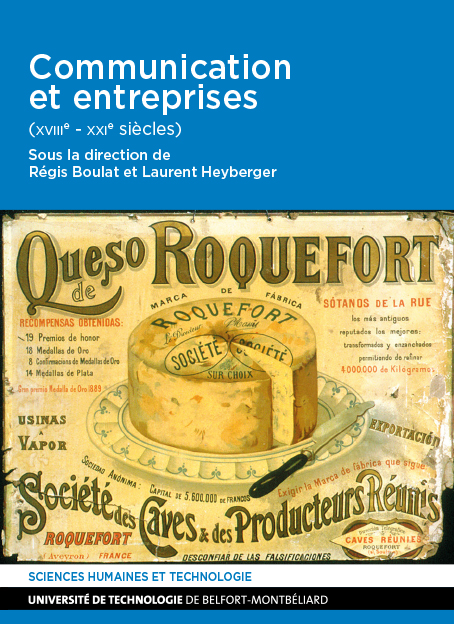
Communication and Business
Edited by Régis Boulat and Laurent Heyberger
Publication Date:July 2022
. Dimensions: 16x 22 cm / 288 pages
Paperback:19 euros – ISBN 979-10-91901-56-7
PDF:13 euros – ISBN 979-10-91901-73-4
ePUB: 13 euros – ISBN 979-10-91901-57-4
Bundle (paperback + PDF + ePUB):21 euros – ISBN 979-10-91901-58-1
Content: Sincethe early days of the textile industry during the first wave of industrialization, corporate communication has continually evolved and refined its tools and media, as well as its objectives and strategies, as new needs emerged, consumption grew, and markets became saturated. From basic necessities and everyday consumer goods to high-end Swiss watches, the wide range of case studies gathered here helps to better understand the historical depth and multifaceted nature of corporate communication.
In particular, the book reexamines the relationship between emerging trademark law and market expansion; the evolving role of intermediaries in the distribution and marketing chain; the temporal dimensions of communication (crisis communication, the advent of immediacy); the circulation of models (public, private, Americanization), and the “values” promoted by “global” strategies and increasingly sophisticated communication tools, which paradoxically draw upon the past, tradition, and heritage.
The notion of “unfair competition” and imitation, in turn, raises the question of “fair competition,” the “authentic” product, and its criteria for authenticity; just as communication about “values” raises the question of what fosters connection and a sense of belonging in an increasingly individualistic society, with ever-stricter ethical and ecological demands, to which companies respond with either a genuine “societal” and environmental commitment orgreenwashing
Under the supervision of Régis Boulat (associate professor at the University of Haute-Alsace) and Laurent Heyberger (HDR-certified associate professor at the Belfort-Montbéliard University of Technology).
Authors:Raphaël Baumard, Yves Bouvier, Paul Dietschy, Sabine Effosse, Bruno Evans, Aziza Gril-Mariotte, Ludovic Laloux, Stéphanie Le Gallic, Martial Libera, Thomas Mollanger, Nadège Sougy, Félix Torres, Sylvie Vabre
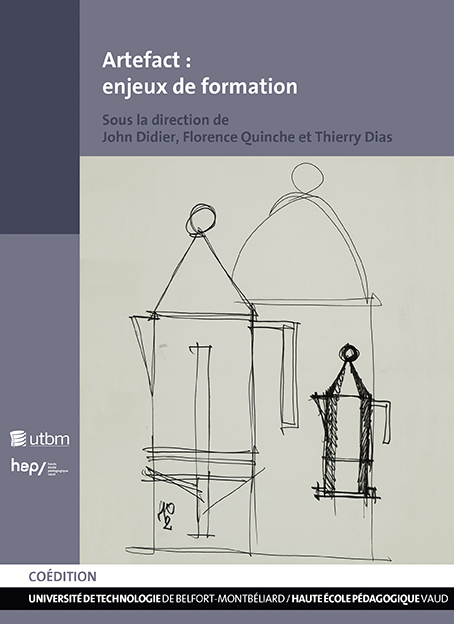
Artefact: Training Challenges
Edited by John Didier, Florence Quinche, and Thierry Dias
Publication Date:May 2022
. Dimensions: 16x 22 cm / 352 pages
Paperback:19 euros – ISBN 979-10-91901-53-6
PDF:13 euros – ISBN 979-10-91901-83-3
ePUB: 13 euros – ISBN 979-10-91901-54-3
Bundle (paperback + PDF + ePUB):21 euros – ISBN 979-10-91901-55-0
Content: Theconcept of an artifact refers to both an object and an artificial system, provided it is designed, manufactured, and used by humans. Due to its multidisciplinary nature, the artifact facilitates dialogue among researchers. These diverse and contrasting perspectives give rise to a wide variety of definitions. In line with this approach, this collective work offers multiple perspectives on the artifacts used in educational settings.
Its cross-disciplinary nature opens up new and particularly fruitful areas of inquiry for educational research. Through its unique ability to crystallize human activity, the artifact enables those involved in training—whether designers or users—to access the depth of knowledge it contains and presupposes.
Authors: Valérie Batteau, Romain Boissonnade, Nathalie Bonnardel, Jean-François Bourdet, Bernard Chabloz, Stéphanie Dénervaud, Thierry Dias, John Didier, Nicole Durisch Gauthier, Elisabeth Eichelberger, Sonya Florey,Antonio Iannaccone, Alaric Kohler, Antje-Marianne Kolde, Anja Küttel, Nicolas Perrin, Florence Quinche, Samira Mahlaoui, Guillaume Massy, Grégory Munoz, Éric Sanchez, Philippe Teutsch, Caroline Thélin Metello
Video clip:
This collection brings together works that explore the interrelationship between technology and the environment, whether they are theoretical works on this interrelationship, analyses of existing situations or artifacts, or presentations of innovative systems. It reflects our commitment to never separate the study of technology from its impact on the environment.
read more
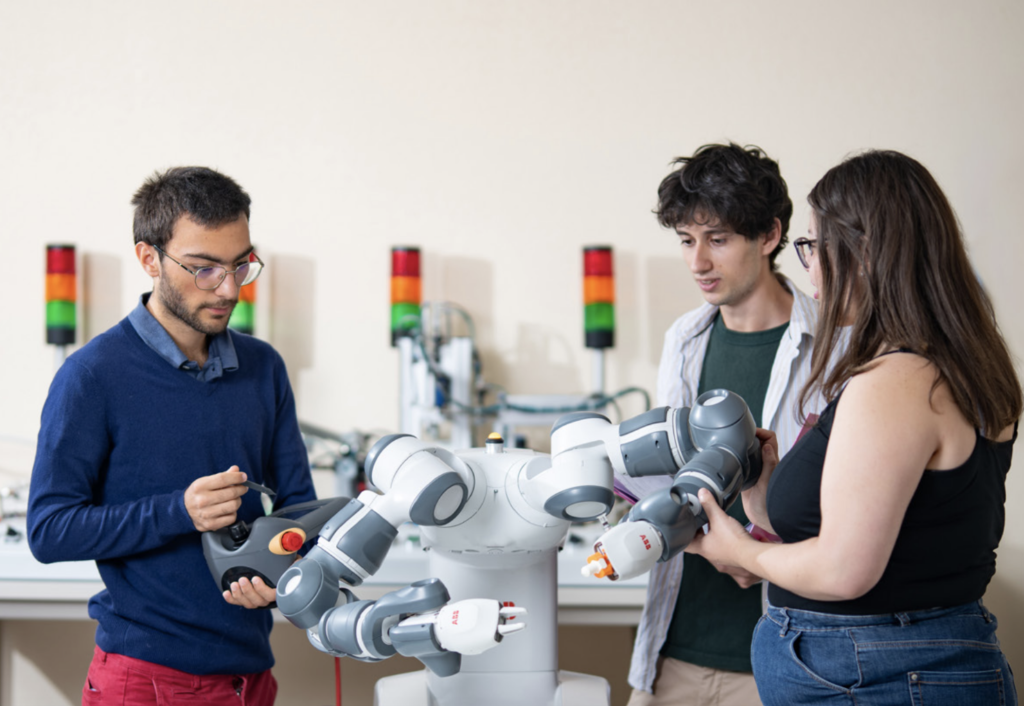
The collection reflects research conducted in the field of technology education and/or the humanities. The collection includes publications that document this research (reworked dissertations, conference proceedings, etc.) and its practical applications (experiment reports, teaching materials, and student projects). It demonstrates our university’s strong commitment to disseminating the innovative initiatives taking shape within its walls.
read more
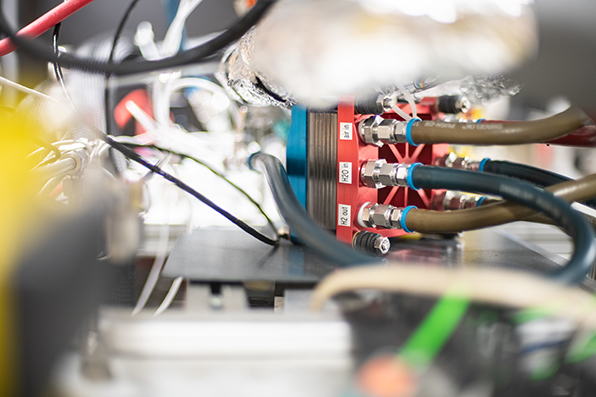
The collection reflects research conducted in the field of technology education and/or the humanities. The collection includes publications that document this research (reworked dissertations, conference proceedings, etc.) and its practical applications (experiment reports, teaching materials, and student projects). It demonstrates our university’s strong commitment to disseminating the innovative initiatives taking shape within its walls.
read more

Text to add
read more
A. Haudricourt has often sought to establish technology as a discipline within the humanities. The “Humanities and Technology” series aims not only to highlight research that, broadly speaking, combines the humanities and technology, but also to affirm, in line with Haudricourt’s view, that “if technology is to be a science, it must be a science of human activities.”
read more

The “Co-publication” series features research published in collaboration with other publishers or research institutions. It is the result, in particular, of collaborations between the UTBM Publishing Division and academic partners such as the Vaud University of Teacher Education (Switzerland), Alphil-Presses universitaires Suisse, the University of Paris 1 Panthéon-Sorbonne, the University Press of Franche-Comté, the University Press of Strasbourg, Mare & Martin, and others.
read more
The *Cahiers de RECITS* (Research and Studies on Industrial, Technological, and Societal Change) aim to highlight the research of members of the eponymous laboratory while also welcoming contributions from external researchers on topics such as the history of technology and industry, economics, management, and, more generally, any field of the humanities that seeks to understand the phenomenon of technology in all its synchronic and diachronic dimensions by situating it within its complexity and context.
read more
Sevenans Site – 90010 BELFORT cedex – Tel. +33 (0)3 84 58 32 72
Please return ourorder form along with your payment to
or place your order directly online through ourpublishing store
86 Rue Claude Bernard – 75005 Paris – Tel. +33 (0)1 47 07 83 27
Hours: Monday through Friday from 10 a.m. to 7 p.m. and Saturday from 11 a.m. to 7 p.m.
Online store:http://www.lcdpu.fr/editeurs/utbm/
(Interinstitutional Center for the Dissemination of Publications in the Humanities) (for professionals)