Home / Publications / Humanities and Technology Collection
A. Haudricourt has often sought to establish technology as a discipline within the humanities. The “Humanities and Technology” series aims not only to highlight research that, broadly speaking, combines the humanities and technology, but also to affirm, in line with Haudricourt’s view, that “if technology is to be a science, it must be a science of human activities.”
UTC, or The Saga of the Technologists
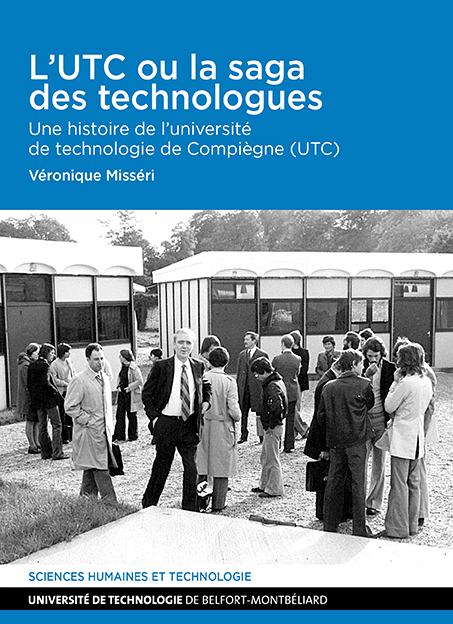
Véronique Misséri
Publication Date: December2024
. Dimensions: 16x 22 cm / 672 pages
Paperback:25 euros – ISBN 979-10-91901-69-7
PDF:17 euros – ISBN 979-10-91901-70-3
ePUB:17 euros – ISBN 979-10-91901-71-0
Content: Whydid students choose UTC in 1973, when it had no campus and offered no degree? Not because of a dream, but perhaps because of the promise of being the architects of change, of bringing it about, of staying ahead in a world where technological evolution is transforming social practices and spatiotemporal frameworks… UTC champions technology at the highest level of higher education and research. Neither a school nor a science university—but an institutional hybrid—UTC fosters convergence between engineering and research, academia and industry, through practical action. Echoing the urgent need to transform institutions that have fallen out of step with the dynamics of society, it challenges the traditions of the French system. UTC is an Active Convergence Unit (UAC)—that is, an institution that transforms its environment through unexpected collaborations. It has emerged with a mission of educational experimentation, directly aligned with the evolution of public policy.
This story is, first and foremost, one of a collective endeavor that is gradually establishing technological research and the training of “technologists” as integral components of innovation ecosystems. Academic and institutional entrepreneurs are working to make this endeavor a success, initially supported by sponsors from industry, politics, the research community, and senior government officials. Conversely, whether through open or covert opposition or more diffuse disagreements, the inertia of the academic system hinders the organization’s development, even as it draws inspiration from it. Navigating the tension between organizational innovation, regional integration, and institutional legitimacy (the phenomenon of isomorphism…), it appears to follow a cycle toward becoming an intermediary institution. It is this saga that is revealed through testimonies, archives, and press coverage… The study focused on the institution’s emergence up to around 2005, after which it explored only a few avenues in an attempt to bring this first cycle of development to a close.
Keywords: technology, engineering, technology research, University of Technology, engineering school, convergence, active unit, innovation, ecosystem, institutional legitimacy, isomorphism, organization, university configuration, meso-sociological approach.
Colonial Industries in an Imperial Context
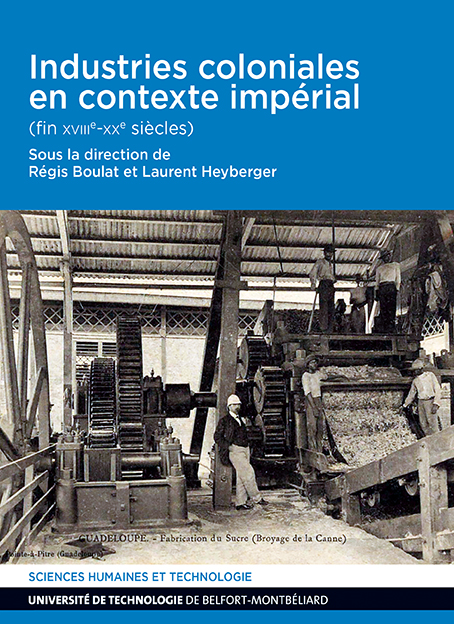
(late18th–20thcenturies)
Edited by Régis Boulat and Laurent Heyberrger
Publication Date: July2023
. Dimensions: 16x 22 cm / 232 pages
Paperback:19 euros – ISBN 979-10-91901-62-8
ePUB book: 13 euros – ISBN 979-10-91901-63-5
PDF book:13 euros – ISBN 979-10-91901-65-9
Bundle (paperback + PDF + ePUB): 21euros – ISBN 979-10-91901-64-2
Content: The“colonial pact” is often considered one of the causes of underdevelopment in certain countries of the Global South today. It requires colonies to supply their mother countries with raw materials in exchange for the latter’s manufactured goods, to such an extent that “industry” and “colony” seem to constitute a historical oxymoron. The pact is generally reconsidered only in times of war, the postwar period, or in preparation for war—that is, in light of geopolitical and military considerations, rather than economic or social ones. In the case of France, it was not until after 1945—well after the British Empire—that, faced with population explosions and the rise of political and social demands from the colonized, political and economic leaders gradually began to question this imbalance and propose new approaches. This book examines this oxymoron, from the first attempt to mechanize the Cuban sugar industry in the late18th centuryto the exploitation of Algerian oil in the 1950s, including the statistical debates of the interwar period on distinguishing between industrial and artisanal production. Corporate strategies, imperial strategies, the management of the colonial workforce, and the social challenges of industrialization are analyzed in particular through new African and American case studies that draw on previously unpublished sources—both private and public, oral and written.
Authors: AlainBELTRAN, Régis BOULAT, Mathilde COCOUAL, Koffi Innocent DIEZOU, Daouda DIOP, Irina GOUZEVITCH, Dmitri GOUZEVITCH, Laurent HEYBERGER, Radouan Andrea MOUNECIF, Béatrice TOUCHELAY, Marie TOUCHELAY, Lucile ZOUYA MIMBANG
Keywords: History, colonization, colonies, industry, France, Africa, South America, labor force.
Communication and Business
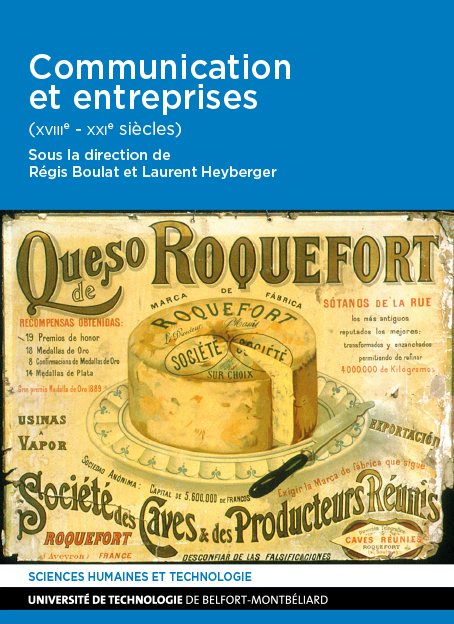
Edited by Régis Boulat and Laurent Heyberger
Publication Date:July 2022
. Dimensions: 16x 22 cm / 288 pages
Paperback:19 euros – ISBN 979-10-91901-56-7
PDF:13 euros – ISBN 979-10-91901-73-4
ePUB: 13 euros – ISBN 979-10-91901-57-4
Bundle (paperback + PDF + ePUB):21 euros – ISBN 979-10-91901-58-1
Content: Sincethe early days of the textile industry during the first wave of industrialization, corporate communication has continually evolved and refined its tools and media, as well as its objectives and strategies, as new needs emerged, consumption grew, and markets became saturated. From basic necessities and everyday consumer goods to high-end Swiss watches, the wide range of case studies gathered here helps shed light on the historical depth and multifaceted nature of corporate communication.
In particular, the book reexamines the relationship between emerging trademark law and market expansion; the evolving role of intermediaries in the distribution and marketing chain; the temporal dimensions of communication (crisis communication, the rise of immediacy); the circulation of models (public, private, Americanization), and the “values” promoted by “global” strategies and increasingly sophisticated communication tools, which paradoxically draw upon the past, tradition, and heritage.
The notion of “unfair competition” and imitation, in turn, raises the question of “fair competition,” the “authentic” product, and its criteria for authenticity; just as communication about “values” raises the question of what fosters connection and identification in an increasingly individualistic society, with ever-stronger ethical and ecological demands—demands met either by genuine “societal” and environmental commitment on the part of companies or bygreenwashing.
Under the supervision of Régis Boulat (associate professor at the University of Haute-Alsace) and Laurent Heyberger (HDR-certified associate professor at the Belfort-Montbéliard University of Technology).
Authors:Raphaël Baumard, Yves Bouvier, Paul Dietschy, Sabine Effosse, Bruno Evans, Aziza Gril-Mariotte, Ludovic Laloux, Stéphanie Le Gallic, Martial Libera, Thomas Mollanger, Nadège Sougy, Félix Torres, Sylvie Vabre
Technical Democracy in Action
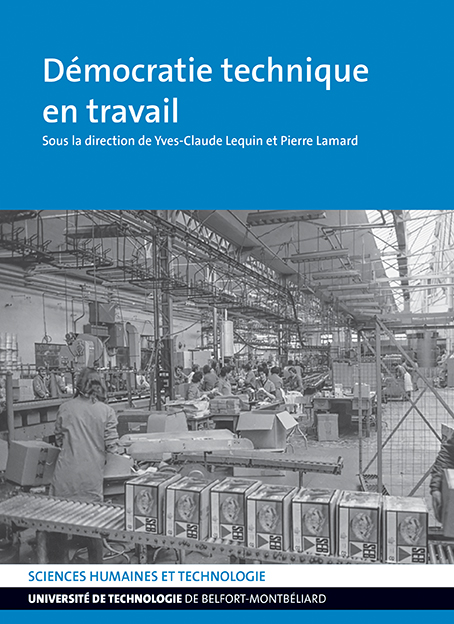
Edited by Yves-Claude Lequin and Pierre Lamard
Publication Date:May 2021
. Dimensions: 16x 22 cm / 252 pages
Paperback:19 euros – ISBN 979-10-91901-50-5
PDF:13 euros – ISBN 979-10-91901-51-2
Bundle (paperback + PDF):21 euros – ISBN 979-10-91901-52-9
Contents:Based on a scientific session at the 45th symposium of the International Committee for the History of Technology, organized by Jean Monnet University in Saint-Étienne in 2018 on the theme“Technological Changes, from Yesterday to Tomorrow. 50 Years of ICOHTEC,” this volume aims to highlight the extreme “versatility” of the concept of technical democracy. Following the publicationof *Elements of Technical Democracy*(2015) and*Becoming an Actor in a Technical Democracy: Toward a Pedagogy of Technology*(2017), this third collective contribution to the expansion of a democratic perspective in this field is based on the premise that all human activity necessarily involves a technical dimension. Whether free or controlled, these activities incorporate varied content and operations on different scales. Constantly subject to tension, they are perpetually shaped by those who carry them out—and not merely by those who design or “manage” them.
Here we are at the heart of a process that examines the modes of “governmentality” in science and technology, the interplay of actors, and the structure of decision-making within processes of creativity, design, and, ultimately, innovation… But regardless of the forms of appropriation, transgression, consultation, and above all, political deliberation, the concept of technical democracy can only be realized if all children, adolescents, students, and eventually citizens are educated to become technically discerning and competent. This is precisely the significance of the rise of this new movement. May this book contribute to this necessary awareness.
Authors:Bertrand Bocquet, Noémie Boeglin, Aurélie Brayet, Vincent Dray, Marie-Pierre Escudié, Thomas Le Guennic, Saliha Hadna, Yves-Claude Lequin, Pierre Lamard, Alexandre Moatti, Bénédicte Rey, Nicolas Simoncini, Mathieu Triclot, Luc Rojas
Video clip:
The World of Industrial Engineering in the 20th Century
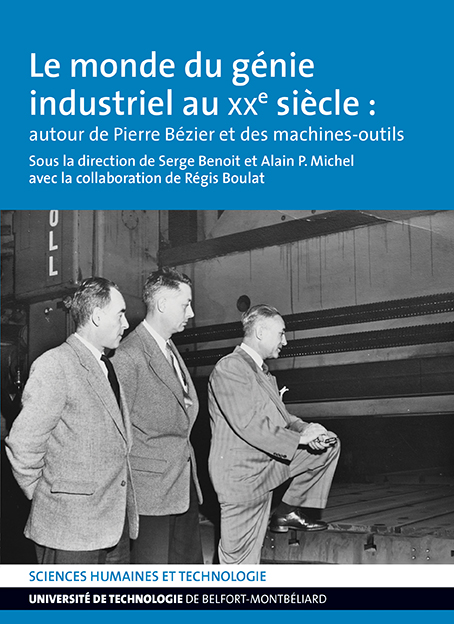
Edited by Serge Benoit and Alain P. Michel, with the collaboration of Régis Boulat
Publication Date:January 2016
. Dimensions: 16x 22 cm / 432 pages
Paperback:22 euros – ISBN 979-2-914279-92-5
PDF:15.40 euros – ISBN 979-2-914279-93-2
Bundle (paperback + PDF):24 euros – ISBN 979-2-914279-94-9
Content: Pierre Bézier (1910–1999) is a remarkable, though relatively little-known, figure in the history of 20th-century industrial technology. The general public knows very little about this French engineer, who was, in turn, the pioneer in France of an original form of automation (electromechanical transfer machines), a champion of numerical control (robots), and then the global father of industrial computing (computer-aided design and manufacturing: CAD/CAM). He is still renowned today in computer science circles for the “curves and surfaces” that bear his name and that have “redesigned” the virtual world. He is universally known among automotive and mechanical engineers, who have established an award in his honor. He left a lasting impression on the executives and technicians at Régie Renault who knew him during his long career (1933–1975) with the automaker. His doctoral dissertation in mathematics, defended in 1977 at the start of his active retirement, sent shockwaves through the field of applied sciences.
This book aims to contribute to a better understanding of the history of this great engineer and innovator by placing his major achievements within the international context of the extraordinary industrial upheavals of his era—and, in particular, within the machine tool sector.
Authors:
· Jonathan AYLEN(Associate Professor, Manchester Business School)
· Jean-François BELHOSTE(Director of Studies, École pratique des hautes études)
· Serge BENOIT(Associate Professor, IDHES – University of Evry-Val-d’Essonne)
· Jean-Claude BOUTONNET(Honorary General Engineer, SNCF)
· Jonathan BREWSTER(Ph.D. in Management, Case Western Reserve University, Cleveland)
· Jean-Marc BRUN(Professor, École Polytech Marseille – Department of Computer Science)
· Kathleen BUSE(Associate Professor, Case Western Reserve University, Cleveland)
· Marc DANIEL(Professor, École Polytech Marseille – Department of Computer Science)
· Gilbert DEMENGEL(IGEN in Mathematics, École normale supérieure de Cachan)
· Pierre-Yves DONZÉ(Associate Professor, Osaka University)
· David EDGERTON(Professor, Imperial College London)
· Valentina FAVA(Research Fellow, Purkyn Foundation – Czech Academy of Sciences)
· Claudine FONTANON(Associate Professor, École des hautes études en sciences sociales)
· Patrick FRIDENSON(Director of Studies, CRH – School for Advanced Studies in the Social Sciences)
· Anne-Françoise GARÇON(Professor, CH2ST – University of Paris I Panthéon-Sorbonne)
· André GRELON(Director of Studies, School for Advanced Studies in the Social Sciences)
· Jean-François GREVET(Associate Professor, University of Lille)
· Marie-Claire GUY(Student, École du Louvre)
· Nicolas HATZFELD(Professor, IDHES – University of Evry-Val-d’Essonne)
· Masato ITOHISA(Ph.D. Candidate, University of Tokyo)
· Gabrielle KERGROHEN(Student, École du Louvre)
· Jean-Louis LOUBET(Professor, IDHES – University of Evry-Val-d’Essonne)
· Alain P. MICHEL(Professor and Director of IDHES, IDHES – University of Evry-Val-d’Essonne)
· Pierre MOUNIER-KUHN(Research Engineer, University of Paris-Sorbonne)
· Toshikatsu NAKAJIMA(Professor, Rikkyo University)
· Sigfrido RAMIREZ(Research Fellow, Saxo Institute – University of Copenhagen)
· Jean-Pierre POITOU(Research Director, CNRS)
· Gwenaële ROT(Professor, CSO – Sciences Po)
· Philip SCRANTON(Professor, Rutgers University – New Jersey)
· Gustav SJÖBLOM(Associate Professor, Chalmers University of Technology, Gothenburg)
· Paul SMITH(Historian, Directorate General of Cultural Heritage)
· Jacques THILLIEZ(Engineer, École Centrale de Paris & École Supérieure d’Électricité)
· Foteini TSAGLIOTI(Ph.D. Candidate, University of Athens)
· Aristotle TYMPAS(Associate Professor, University of Athens)
· François VATIN(Professor, IDHES – University of Paris X-Nanterre)
· John WILSON(Professor, University of Liverpool)
· Jonathan ZEITLIN(Professor, University of Amsterdam)
Writers, After All?
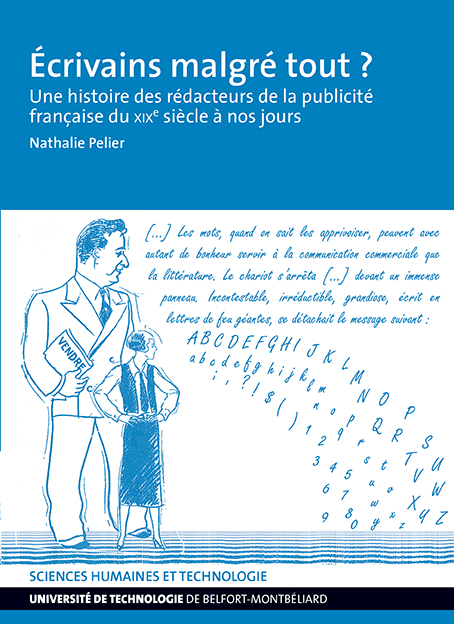
By Nathalie Pelier
Publication Date:November 2015
. Dimensions: 16x 22 cm / 192 pages
Paperback:14 euros – ISBN 978-10-91901-06-2
PDF:9.80 euros – ISBN 978-10-91901-07-9
Bundle (paperback + PDF):16 euros – ISBN 978-10-91901-08-6
Content: From very early on, advertising has been the subject of numerous personifications, both positive and negative. In 1990, for example, a copywriter admitted to having lived “in his imagination” with this “woman of ill repute” and, moreover, to having“enjoyeditmore than[he]should have.”¹ .” The tendency to personify advertising and to cast it as a subject rather than an object stems from its pervasive nature, which tends to make people forget who produces it. However, by restoring “advertising” to its proper place as an object and restoring to the professionals who create it their true status as subjects, it is possible to demystify the former and “re-humanize” the latter. Copywriters and creative directors are not, as this book will demonstrate, mere or vulgar “salespeople with words” but practitioners of language who harbor the lovely fantasy of perhaps, here and there, being writers after all.
This book is based on the author’s doctoral dissertation, titled “Contribution to a History of Representations of French Advertising Professionals: The Case of Copywriters and Copywriters-Concept Developers,” defended at the University of Technology of Belfort-Montbéliard under the academic supervision of Robert Belot.
1. BERNHEIM, François, *Fan de pub*, Paris: Balland, 1990, pp. 78–79.
Author:Nathalie Pelier
Elements of Technical Democracy
Edited by Yves-Claude Lequin and Pierre Lamard
Publication Date:January 2015
. Dimensions: 16x 22 cm / 284 pages
Paperback:19 euros – ISBN 978-10-91901-00-0
PDF:13 euros – ISBN 978-10-91901-01-7
Bundle (paperback + PDF):21 euros – ISBN 978-10-91901-02-4
Content: The concept of “technical democracy” evokes both a sense of the obvious and a sense of perplexity: since technology so often appears to be a natural extension of science, why should citizens have a say in it? However, how can we imagine that technical systems, which have such a profound impact on individual and collective choices, could be exempt from public deliberation and the decision-making power of citizens?
Since the French Revolution, this debate has been a recurring theme. Various segments of French society continue to grapple with this paradox. While it is acceptable to deliberate on political or economic matters, doing so regarding technology remains far more difficult.
Taking a multidisciplinary approach (involving historians, sociologists, philosophers, technicians, educators, and others), this book offers an overview of the wide variety of movements and approaches emerging in this field. Rather than a synthesis—which would be premature—it serves as an introduction to a field rich with possibilities.
Author: Guillaume Carnino, Marianne Chouteau, Bernard Decomps, John Didier, Vincent Dray, Marie-Pierre Escudié, Andrew Feenberg, Joëlle Forest, Éric Guichard, Bernard Guy, Léonard Laborie, Pierre Lamard, Martine Legris-Revel, Yves-Claude Lequin, Harold Mazoyer, Céline Nguyen, Victor Petit, Dominique Pinsolle, Erwin Van Handenhoven.
Pierre Bietry (1872–1915)

By Christophe Maillard
Publication Date:October 2013
; Dimensions: 16x 22 cm / 206 pages
Paperback:14 euros – ISBN 978-2-914279-74-1
PDF:10 euros – ISBN 978-2-914279-75-8
Bundle (paperback + PDF):16 euros – ISBN 978-2-914279-76-5
Content:Pierre Biétry (1872–1918) is a forgotten figure in the political and labor union life of the Belle Époque. A native of eastern France, this ordinary watchmaker became a passionate radical republican polemicist before joining the socialist and labor union movements. A leading figure in the major strikes in the Belfort-Montbéliard region in 1899, he joined the “yellow” labor movement in 1901 after being expelled from the Socialist Party. This marked the beginning of a journey that led him to the Chamber of Deputies (1906–1910) and made him a tireless advocate for property rights and co-management between employers and workers. As an advocate of a new social and political theory embodied in the “Yellow” ideals, Pierre Biétry fiercely opposed socialism and quickly became the bane of the working class, employing both anti-Semitism and nationalism to mobilize the masses and reform French society. Ultimately, he failed and died in Indochina in 1918.
While painting a fresh portrait of the figure, Christophe Maillard goes far beyond the scope of a traditional biography, first exploring the “Yellow” movement—a labor current somewhat neglected by historians. Next, moving beyond the purely labor union context, he forcefully addresses the political dimension of the figure, who—bolstered by his 1906 parliamentary mandate—embarked on a precarious path between national socialism and national socialism, a subtle distinction in terminology that masks a genuine ideological dilemma.
Foreword by Pierre Lamard, university professor, UTBM.
This book was supported by the IUFM of Franche-Comté, the teacher-training college affiliated with the University of Franche-Comté.
Author:Christophe Maillard
South Korea-France

Edited by Robert Belot, Woo Bong Ha, and Jung Sook Bae
Publication Date:June 2013
. Dimensions:16 x 22 cm / 336 pages
Paperback:19 euros – ISBN 978-2-914279-67-3
PDF:13.30 euros – ISBN 978-2-914279-68-0
Bundle (paperback + PDF):21 euros – ISBN 978-2-914279-72-7
Content: Koreaand France were both occupied by an Axis power during World War II. In both of these conquered nations, reactions to these attempts at subjugation had their own specific characteristics; nevertheless, despite differences in culture (among both the occupiers and the occupied) and duration, they share many common traits. This opens up the possibility of understanding this response to violence through an intercultural lens, with differences and similarities shedding new light on this shared phenomenon of resistance—or accommodation—toward the occupier. This book aims to be the first step toward an original epistemological approach to this political phenomenon of the 20th century: occupation.
Authors:Jung Sook Bae, Robert Belot, Yannick Bruneton, Myung Won Cho, Pierre Eckly, Gaël Eismann, Woo Bong Ha, Suk-In Kweon, Yong-Jae Lee, Sun Hee Park, Olivier Schmitt, Geo-Suk Suh
French chainmakers
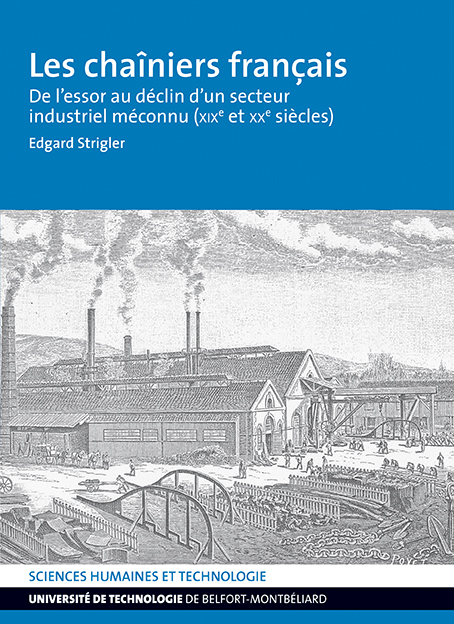
By Edgard Strigler
Publication Date: December2012
. Dimensions:16 x 22 cm / 528 pages
Paperback:29 euros – ISBN 978-2-914279-65-9
PDF:20.30 euros – ISBN 978-2-914279-66-6
Bundle (paperback + PDF):31 euros – ISBN 978-2-914279-69-7
Contents: TheFrench chain industrybegan in 1823 when the Navy decided to build a workshop to produce anchor chains at the Forges de la Chaussade in Guérigny, in the Nièvre department. At the same time, workshops of all sizes sprang up to supply the merchant marine. This book describes the rise of two districts: Saint-Martin-la-Plaine in the Saint-Étienne region and Saint-Amand-les-Eaux in the Valenciennes region. The former never progressed beyond the proto-industrial stage, while mechanization advanced in the Saint-Amand chain factories with the adoption of electric welding, accompanied by the transition from iron to steel.
Difficulties in achieving sufficiently high-quality forged welds spurred innovation, in which Galle distinguished himself following in Vaucanson’s footsteps. Manufacturers of mechanical chains proliferated in Paris at the end of the 19th century to meet the new demands of the bicycle industry. They faced competition not only from Peugeot, which launched its own chain production, but also from English manufacturers who set up shop in Calais and Swiss manufacturers in the Jura region. Chain manufacturers were subject to the vagaries of the economy, and while many of them went out of business during the crises of the 1920s and 1930s, others took advantage of opportunities created by military demand.
The development of the automobile and the mechanization of industry led to rapid growth among mechanical chain manufacturers during the Trente Glorieuses. The two largest manufacturers opted for mass production, while several family-owned businesses turned to flexible production.
Beginning in the 1970s, many chain manufacturers went out of business. Competition from countries with low labor costs and strategic errors by certain executives accelerated this trend. A few French and European success stories show, however, that the decline was not inevitable.
This book was published with the support of ARTEMA, the Association of Mechatronics Manufacturers.
Foreword by Patrick Fridenson, Director of Studies at the École des Hautes Études en Sciences Sociales.
From Jaurès to Pétain
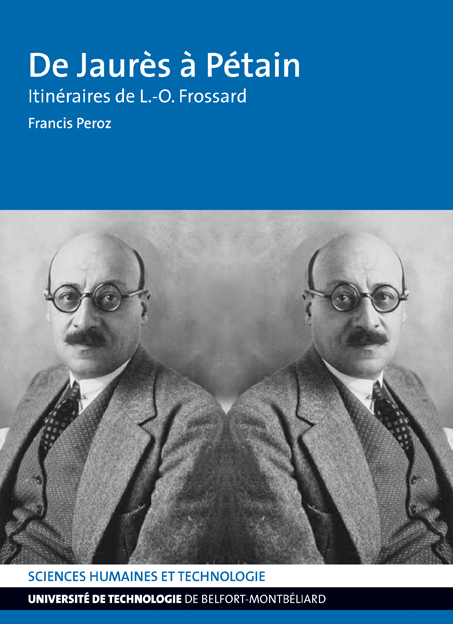
By Francis Peroz
Publication Date: July2012
. Dimensions:16 x 22 cm / 288 pages
Paperback:14 euros – ISBN 978-2-914279-61-1
PDF:9.80 euros – ISBN 978-2-914279-62-8
Synopsis:Ludovic-Oscar Frossard’s life storyis anything but ordinary. Starting out as a village schoolteacher, he went on to rub shoulders with many historical figures: Léon Blum, Lenin, Trotsky, as well as Pierre Laval and Philippe Pétain, to name just a few. He was captivated by Jean Jaurès, whose speeches introduced him to socialism. He met Lenin and became one of the key figures in the split of the SFIO at the Tours Congress in late 1920, as well as the first secretary of the new French Communist Party. Then, disillusioned, he returned to the “old party”—the first step in a new political evolution that led him to support Marshal Pétain during World War II. This is the portrait usually painted of him. Could there be two Frossards: the founder of the Communist Party, whom we readily remember, and the other—the supporter of the Vichy regime?
New archival materials offer a better understanding of the complexity of this figure, who embodied the major schools of thought of the first half of the 20th century: socialism and communism, as well as patriotism, pacifism, and a form of Marshalism tinged with resistance. The portrait of Ludovic-Oscar Frossard presented here is entirely new and sheds fresh light on this pivotal political figure of the interwar years. A brilliant and formidable orator, a prolific journalist and writer, he was also a man often cast aside by history.
This book was published with the support of the municipalities of Foussemagne (90) and Ronchamp (70)
Winner of the 2012 Lucien Febvre Prize
New Elements of Technology
Edited by Michel Faucheux and Joëlle Forest
Published: March2012
. Dimensions:16 x 22 cm / 152 pages
Paperback:22.5 euros – ISBN978-2-914279-53-6
PDF:16 euros – ISBN 978-2-914279-54-3
New Technological Developments
Content:This book deals with a science that we will call “techn-ology.” It focuses on technology and helps readers understand its foundations, aspects, and challenges.
Its title is a direct reference to *Elements of Technology*, a series of lectures given at Harvard by Jacob Bigelow (1829).
In it, Bigelow defined a science-technology relationship in which science focuses on the applications of technology, while technology—the “useful arts”—draws on scientific progress. This conception persists to this day: viewed as a neutral and transparent application of science, technology effectively recedes into the background, unnoticed.
It is precisely this paradigm that this book aims to challenge by outlining the contours of a technology and a science of technology. We believe it is possible to study technology scientifically without limiting it to a mere application of science.
The establishment of “techno-logy” can contribute to transforming higher education—and not only in technical fields—if it is positioned as a true science of technology that encompasses design, creativity, innovation, and also the questioning of certain conceptions of technology.
Several French researchers, specialists in various fields, were invited to contribute to this volume, which we view as an invitation to dialogue addressed to our English-speaking academic colleagues. It also reflects a French tradition of reflection on technology.
Authors: Michel Faucheux, Joelle Forest, Anne-Françoise Garçon, Xavier Guchet, Pierre Lamard, Alain Le Méhauté, Yves-Claude Lequin, Dmitrii Tayurskii, Dominique Vinck
Spy, resistance fighter, terrorist
Texts compiled by Laurent Heyberger
Publication Date:November 2009
; Dimensions: 16x 22 cm / 224 pages
Paperback:13 euros – ISBN 978-2-914279-44-4
Audience:Movie lovers, historians, libraries
Content:Spy, resistance fighter, terrorist: three elements of a triptych marked by secrecy and fascination. Three worlds that overlap, intersect, and merge. Three figures who have inspired a plethora of films based on historical events.
Three figures whose comparison may seem provocative: who today would call the couriers of the Algerian FLN “terrorists”? We must face the reality of the times: one group’s resistance fighters are another’s terrorists; as for the spy film, it continually raises the question of appearances, which are inevitably deceptive.
Films by major figures in cinema—Donen, Rohmer, Mankiewicz, von Trotta, Clouzot, Bernard, Chabrol, Ritt—or by renowned documentary filmmakers—Copans and Karrel—are contextualized here through a multidisciplinary approach.
Part of the “Cinema and History” series at the EntreVues International Film Festival (Belfort), these essays are accompanied by a previously unpublished interview between Robert Belot and Francis Jeanson, in tribute to the latter.
Authors:
·Robert Belot, university professor, UTBM (RÉCITS).
·Jean Birnbaum, journalist at *Le Monde* and essayist.
·Catherine Bizern, deputy director of the EntreVues festival.
·Vincent Casanova, associate professor of history, Ph.D. candidate in contemporary history at the University of Paris I.
· Noël Herpe, associate professor at the University of Caen.
·Laurent Heyberger, associate professor, UTBM (RÉCITS).
·Pierre Lacoste, Admiral (Ret.).
·Morgane Lefeuvre, Ph.D. candidate in film history.
·Olivier Maillart, Associate Professor of Modern Literature, Ph.D. candidate.
·Priska Morrissey, Associate Professor, University of Rennes.
·Klaus-Peter Sick, Faculty Member and Researcher at the Marc Bloch Center in Berlin.
·Marie-Pierre Uolla, Executive Director of International Affairs, Stanford Humanities Center, Stanford University.
Vauban
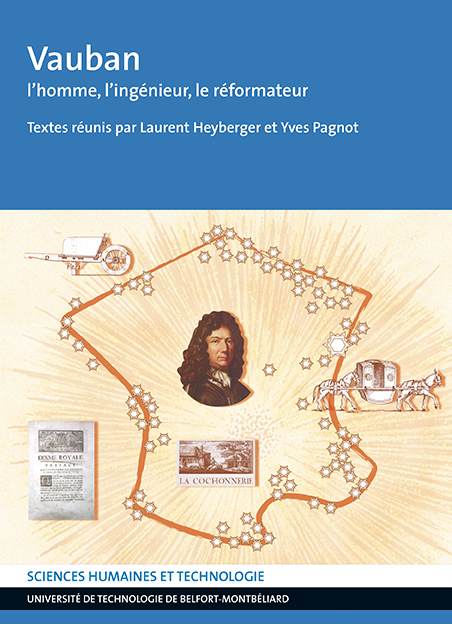
Texts compiled by Laurent Heyberger and Yves Pagnot
Publication Date:February 2008
. Dimensions: 16x 22 cm / 160 pages
Paperback:Out of print – ISBN 978-2-914279-38-3
Audience:School and university students, general public
Content:A legendary figure in the French pantheon, Vauban is placed in context here.
The military engineer is situated within a historical evolution spanning from the Renaissance to the civil engineers of the Industrial Revolution
(L. Heyberger) and examined in relation to France’s territorial planning (M. Barros).
As a technical innovator (barracks, bayonet, wheelbarrow) and social reformer (taxation), he is understood through the debates of the Grand Siècle: Vauban “wished to reform the cumbersome centralist apparatus only to make it more efficient—and ultimately even more centralist,” and yet “only the French Revolution would be able to effectively sweep away the entire established tax system ” (E. Le Roy Ladurie); hence his posthumous legend.
His complex thought is set forth in his “Oisivetés, ou ramas de mémoires à ma façon” (M. Virol).
Particular importance is given to his achievements in Belfort, notably the “second system” developed there for the first time (Y. Pagnot).
Finally, the man himself is portrayed in a dialogue with his family (C. Kobus).
Authors:
· Martin Barros: Research Analyst, Defense Historical Service. Army Department Library
· Laurent Heyberger: Associate Professor of Contemporary History, RECITS/UTBM Research Laboratory (Belfort-Montbéliard University of Technology)
· Christine Kobus: harpsichordist, professor, and head of the early music department at the Belfort Conservatory
· Emmanuel Le Roy Ladurie: of the Institut
· Yves Pagnot: curator of the Belfort Municipal Archives
· Michèle Virol: associate professor of history, Paris IV Sorbonne, UMR Centre R. Mousnier
Intercultural Perspectives on Asia
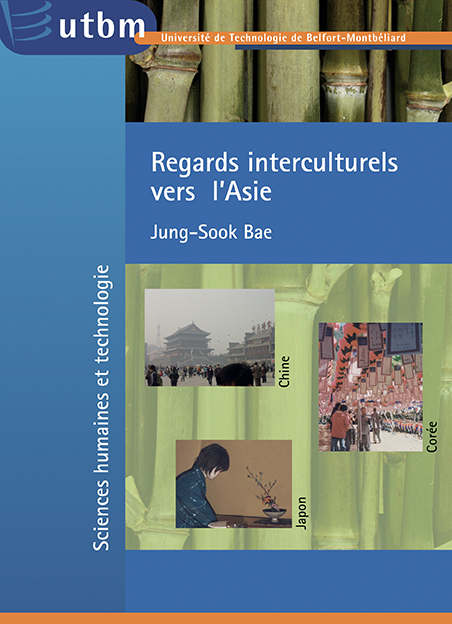
Jung Sook Bae
Publication Date:July 2007
. Dimensions: 16x 22 cm / 368 pages
Paperback:20 euros – ISBN 978-2-914279-34-5
Audience: Academia; businesses; tourism
Content:Exchanges with Asia are on the rise: tourism, the economy, employment (industrial companies), education… This is particularly true with China, South Korea, and Japan.
To ensure that interactions with these different cultures are peaceful and mutually enriching, we must consciously take into account the vast array of cultural nuances inherent in every civilization.
Given the obvious risks of a purely spontaneous approach (misunderstandings, conflicts), it is essential to accompany and support such interactions with genuine learning.
Drawing on a wealth of photographic material she has gathered during her travels, the author provides numerous insights into the everyday life of Northeast Asian civilizations.
Making Your Industrial Project a Success
Edited by Philippe Fabre, Joëlle Forest, Michèle Guingand, Jean-Pierre Micaëlli, and Didier Remond
Published:March 2008
. Dimensions: 16x 22 cm / 208 pages
Paperback:15 euros – ISBN 978-2-914279-37-6
Audience:IUT students, engineering students, technicians, and entry-level engineers
Contents:Properly structuring and managing a project has become a core skill for engineers, technicians, and managers. Developing this skill begins during initial training and continues within the workplace. This guide is intended for students and those just starting out in a company or government agency…
A fundamental resource, its originality lies in its format: neither a user manual nor a guide intended for seasoned project managers, its forty or so fact sheets can be read sequentially to learn about project management; or by immediately accessing specific questions (e.g., “How do I draft functional specifications?”); or by examining, risk by risk (product, stakeholders, process, deadlines, costs), the tools and methods available to mitigate them.
To make it easier to read, each fact sheet follows the same outline: “What is it? Why does it matter? How? Some good ideas. To learn more…” Finally, space is provided for taking notes.
Authors:
· Joëlle Forest, INSA Lyon
· Michèle Guingand
· Didier Rémond, INSA Lyon
· Philippe Fabre, consultant, Lyon
· Jean-Pierre Micaëlli, INSA Lyon
Creative Assessment
By Jean-Pierre Micaëlli and Alain-Jérôme Fougères
Publication Date:May 2007
. Dimensions: 16x 22 cm / 304 pages
Paperback:20 euros – ISBN 978-2-914279-33-8
Audience:Academics; Professionals
Content:Educational monitoring; authorization to proceed with a research program in accordance with ethical criteria; design of a product within a specified budget; forecasting the overall performance of an industrial investment; estimating the impacts of a public policy; diagnosing the causes of quality issues in an operational process; the proper use of public resources by a government agency; etc. There is no social activity that does not rely on evaluation.
Far from being simple or trivial, as is often thought, evaluation is complex: it is an “activity” (in the sense described by Vygotsky). The evaluator draws upon institutions, procedures, tools, objects, and specific intellectual and behavioral approaches. Starting with a problem, the evaluator designs their own tools to arrive at original results. To facilitate this creativity, it is advisable to provide evaluators with computer-assisted evaluation applications—so-called “micro-tools” for evaluation.
Authors:
· Alain-Jérôme Fougères, Belfort-Montbéliard University of Technology
· Jean-Pierre Micaëlli, Belfort-Montbéliard University of Technology
Borders in Pictures
Edited by Robert Belot
Publication date:October 2006
. Dimensions: 16x 22 cm / 136 pages
Paperback:17 euros – ISBN 978-2-914279-30-7
Audience:Movie lovers, historians, libraries
Content:The current trend toward the erasure of borders—linked to globalization and the advent of an information society—is the most tangible sign of our entry into a new world, just as the fall of the Berlin Wall symbolized the end of the ideological division of the world that began in 1947.
How has our perception of the various borders that emerged in the 20th century (nationalist, ideological, ethnic) evolved? Is a border a seam or a cut? A passage or a limit? Exclusion or promise? Fragmentation or preservation of singularities? Hasn’t the removal of political borders (particularly in Europe) allowed other divisions to persist—invisible, certainly, but perhaps more enduring? How can we live without borders?
It is in cinema, the art of the universal, for which “there is no border that cannot be crossed,” that these questions of yesterday and today have been posed.
This book is the result of a symposiumtitled “Real Borders, Artificial Borders: Past and Present,” organized by the RECITS research lab at UTBM in partnership with the Entre Vues festival in Belfort.
Among the films screened and discussed were:*La Ligne de démarcation*, *Les Tortues volent aussi*, *Berlin is in Germany*, *Les Ailes du désir*, *Dernière chance*, *La Tragédie de la mine*, and *Spicheren 1870–2005*.
Presented by Catherine Bizern, the festival’s general delegate.
Authors: Robert Belot, Catherine Bizern, Jérôme Bimbenet, Béatrice Fleury-Villate, Claude Hauser, Klaus-Peter Sick, Jordi Tejel, Marie-Antoinette Vacelet, Jacques Walter
New Europes
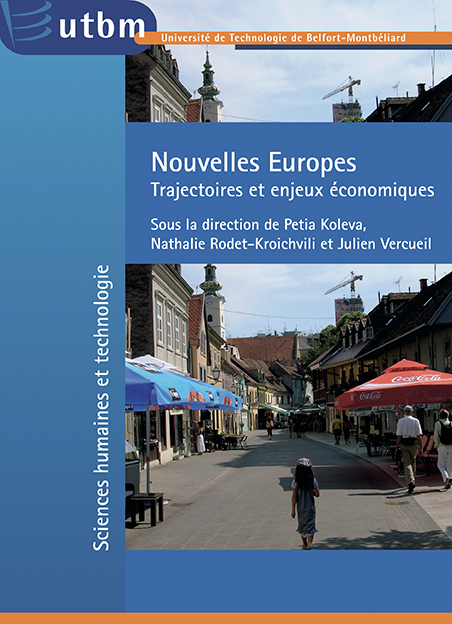
Edited by Petia Koleva, Nathalie Rodet-Kroichvili, and Julien Vercueil
Publication Date:December 2006
. Dimensions: 16x 22 cm / 328 pages
Paperback:19 euros – ISBN 978-2-914279-28-4
Audience:University students (economics, business, sociology, law, political science)
Contents:As the fifth round of European enlargement comes to a close, the authors offer an analysis of the economic transformations in Central and Eastern Europe.
Drawing on a coherent thematic approach (outlined in the first part), they highlight the diversity of Eastern European trajectories, addressing the following topics in turn:
- property regimes,
- monetary aspects,
- forms of food distribution,
- labor markets and pension systems,
- corporate social responsibility,
- foreign direct investment,
- the diversity of capitalist systems.
The book can be read in any order the reader prefers, as it provides the keys to a comprehensive understanding. The authors—academics and practitioners from various European countries—encourage readers to take a fresh look at one of the major transformations of our contemporary world.
As is clear, this book is an invitation to delve into the dynamic complexity of this part of Europe undergoing change.
Authors: David Patricia, Fassio Georges, Koleva Darina, Koleva Petia, Magnin Eric, Marasova Jana, Matos Cristina, Nenovski Nikolay, Rodet-Kroichvili Nathalie, Vercueil Julien, Vincensini Caroline
Technology Comes to the University
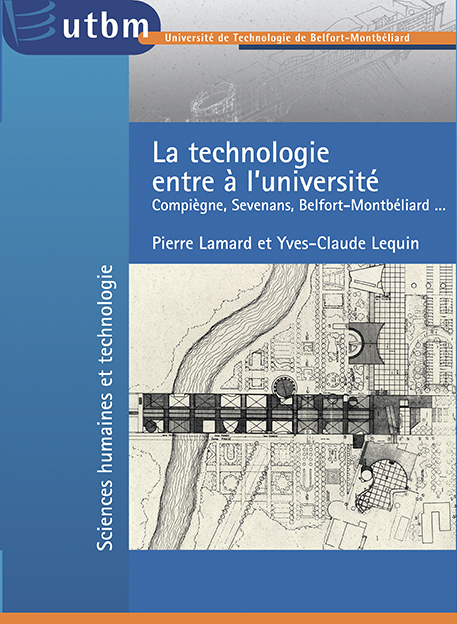
By Pierre Lamard and Yves-Claude Lequin
Publication Date:January 2006
. Dimensions: 16x 22 cm / 392 pages
Paperback:19 euros – ISBN 978-2-914279-24-8
Audience:History, Education, Technology
Content:In 1985, a branch of a university of technology was established near Belfort; today, it has become the Belfort-Montbéliard University of Technology (UTBM), a center for technological research and one of the top ten French engineering schools in terms of the number of graduates.
To understand the uniqueness of this institution, the authors place it within a long-term historical context and a broader geographical framework (highlighting initiatives in Grenoble, Nancy, Lyon, Compiègne, and elsewhere).
The concept of “technology” is analyzed within its very long history, followed by a presentation of the major government initiatives over the past half-century (the creation of the ENSI, INSA, IUT, and other technician training programs, as well as the ENI, etc.); the three universities of technology (Compiègne, Belfort-Montbéliard, and Troyes) are then discussed within their respective contexts.
This history is also a local one—that of the two-century-long growth of the Belfort-Montbéliard industrial region and its initiatives in technical and later technological education.
Richly illustrated, this book explores various aspects: education, research, ties to industry, and architectural and cultural impact.
Authors:
· Pierre Lamard, university professor, Belfort-Montbéliard University of Technology
· Yves Lequin, associate professor, Belfort-Montbéliard University of Technology
European Resistance Movements
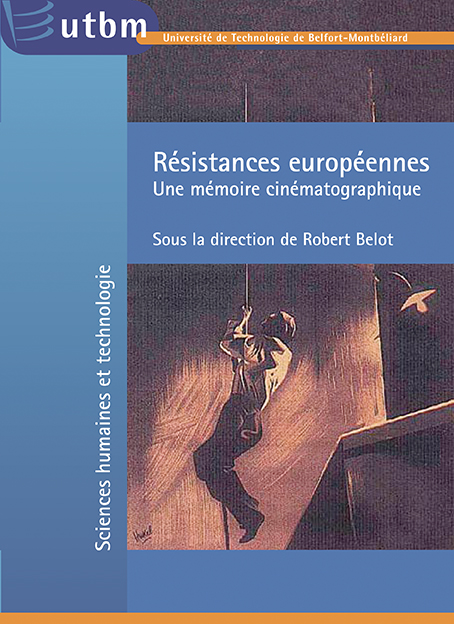
Edited by Robert Belot
Publication Date:November 2005
; Dimensions: 16x 22 cm / 152 pages
Paperback:17 euros – ISBN 978-2-914279-23-9
Audience:Movie lovers, historians, libraries
Content:How does cinema portray history? How can historians make use of cinema? This discussion is explored here using the iconic example of the Resistance against Nazism.
Seeking to move beyond the conventional way historians view films—that is, disregarding their artistic autonomy and judging them solely on the basis of their relationship to reality—this book is based on the idea that historical fiction films become events of their own time and, like any film, possess their own historicity.
Films certainly reveal less about the Resistance to Nazism than about the society in which they were created, as the evolution of how they are perceived is itself a subject of history.
Authors: Bernard Benoliel, Robert Belot, Jean Cherasse, Jean-Marc Dreyfus, Béatrice Fleury-Vilatte, Gilbert Karpman, Suzanne Langlois, Claude Lanzmann, Klaus-Peter Sick
From Industrial Espionage to Technology Intelligence

By Michel Cotte
Publication Date:September 2005
. Dimensions: 16x 22 cm / 298 pages
Paperback:27 euros – ISBN 978-2-914279-20-5
Audience:The general public with a curiosity about the subject
Content:In international industrial and technical relations, the figure of the “spy” haunts the collective imagination. Is this a prominent image that masks a complex reality? Is it espionage, or is it the exchange of ideas essential to invention and creation? Is it rapidly evolving into “technology watch” organized by innovation stakeholders?
Michel Cotte discusses the origins of these exchanges during the industrial boom in Western countries: France, the United States, England, Japan…
Author:Michel Cotte
Co-published by:Belfort-Montbéliard Universityof Technology and Presses Universitaires de Franche-Comté
The Body Revolution
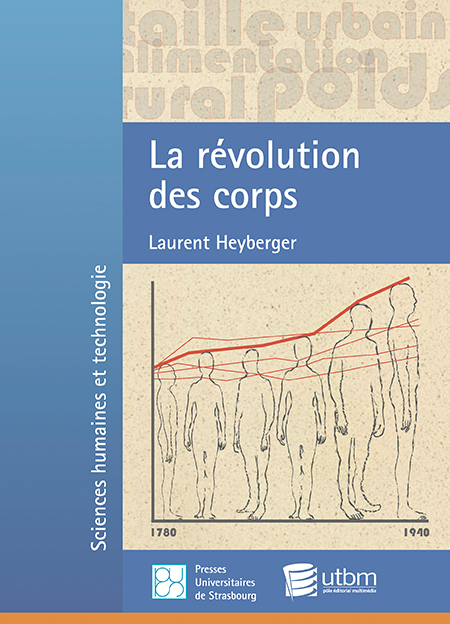
By Laurent Heyberger
Publication Date:October 2005
; Dimensions: 16x 22 cm / 752 pages
Paperback:30 euros – ISBN 978-2-914279-19-2
Audience:History, medicine, sociology
Content:Laurent Heyberger examines the average height of French populations in his work *Economic and Social History of France*; 19th and 20th Centuries; human development; new anthropometric history; standard of living; public health; historical demography; Malthusianism; industrialization; Alsace; Brie; Limousin; Mulhouse—as an indicator of human development. He discovers that the evolution of “biological standards of living”—which appears smooth at the national level—masks contrasting and even jarring regional trends between 1780 and 1940. The 19th century clearly contrasts the emerging industrial city with the countryside (decline in some regions, growth in others). The 20th century held further surprises: convergence among regions, diversification across professions, yet the persistence of social inequalities.
This study of anthropometric history, impressive for the sheer volume of data analyzed (298,000 individual records) and the originality of its approach, brings a fresh perspective to research on living standards in France. It also reveals the hidden side of the Industrial Revolution.
Author: Laurent Heyberger, Ph.D. in Contemporary History, Agrégé in History
Toward a Science of Design

Edited by Joëlle Forest, Caroline Méhier, and Jean-Pierre Micaëlli
Publication Date:June 2005
; Dimensions: 16x 22 cm; 184 pages
Paperback:Out of print – ISBN 978-2-914279-17-8
Audience:Teachers; engineering firm staff; continuing education organizations
Content:This book provides an overview of design sciences, their concepts, and their methods.
Field by field (mechanical engineering, urban planning, architecture, management, etc.) and issue by issue (innovation, eco-design, user input into design, etc.), it catalogs contemporary issues and practices. It then identifies directions for developing these design sciences, which H. Simon (1978 Nobel Prize laureate) predicted would one day become essential.
Authors:
· Jean-François Boujut, INP Grenoble
· Joëlle Forest, INSA Lyon
· Caroline Méhier, INSA Lyon
· Jean-Pierre Micaëlli, INSA Lyon
· Jacques Perrin, INSA Lyon
· Anne-Françoise Schmid, INSA Lyon
· Jean-Yves Toussaint, INSA Lyon
· Willemien Visser, INRIA Rocquencourt
· Monique Zimmerman, INSA Lyon
In 2003, Jean-Pierre Micaëlli and Joëlle Forest published *Artificialism: An Introduction to a Theory of Design* with PPUR
Technical Circulation

Edited by Michel Cotte
Publication Date:September 2004
. Dimensions: 16x 22 cm / 220 pages
Paperback:23 euros – ISBN 978-2-914279-13-2
Audience:The general public with a curiosity about the subject
Content:Long before inventions emerged, people, ideas, books, objects, prototypes, and letters circulated freely. These networks of exchange are examined on a European scale, from Roman times through the 20th century. They provide a better understanding of technical innovation.
Authors: Jean-Louis Bordes, Michel Cotte, Luisa Dolza, Gracia Dorel-Ferr, Francis Dreyer, Ludwig Eschenloh, Robert Fox, Liliane Hilaire-Perez, Corine Maitte, Florence Ott, Serge Paquier, Anne-Catherine Robert-Hauglustaine, V. Seernel, Marie Thebaud-Sorger, Catherine Verna
Co-published by:Belfort-Montbéliard Universityof Technology and Presses Universitaires de Franche-Comté
Technology at the Mercy of History
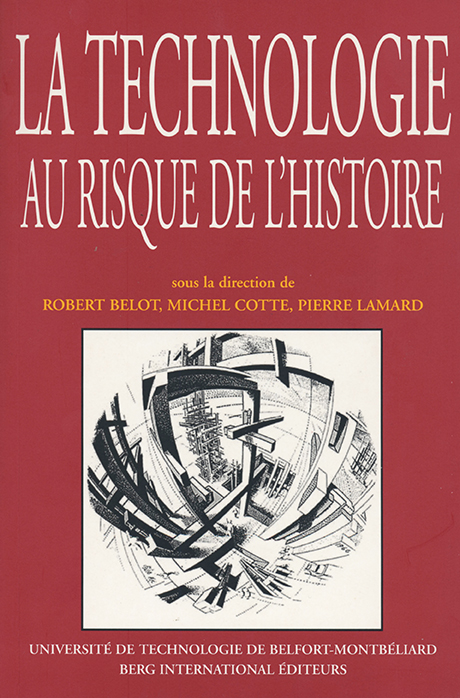
Edited by Robert Belot, Michel Cotte, and Pierre Lamard
Publication Date:August 2000
. Dimensions: 16x 22 cm / 454 pages
Paperback:22 euros – ISBN 978-2-914279-00-0
Content:The technological development that lies at the heart of our modernity and promotes the breaking down of barriers between fields of knowledge today deserves the attention of the social sciences and humanities. For the historian, no research subject is “impure.” Everything belongs to history: the washing machine as much as the moped, helium as much as the PAL and SECAM standards… Contrary to a common misconception, the individual remains the fundamental agent of technological choice.
This book is an invitation to break away from the conventional view that regards technical action as merely the result of various forms of subjugation. By engaging with the complexity of reality, the history of technology can claim to be a genuine investigative endeavor at the heart of human action.
Authors: René Amiable, Louis André, David Aubin, Jean-François Belhoste, Robert Belot, François Caron, A. Carneiro, Jean-Jacques Clair, Virginie Champeau, Jean-Marc Combe, Yves Cohen, Horia Colan, Alain Cortat, Michel Cotte, Agnès D’Angio, Mathieu Detchessahar, Martine Duquesne, Gérard Empotz, Andreas Fickers, Raul Manuel Fontes-Vital, Robert L. Frost, Olivier Garro, Marie-Laure Griffaton, Isabel Amaral, Ichiro Kobayashi, Christophe Koller, Pierre Lamard, Olivier Lavoisy, Yannick Lemarchand, Sylviane Linares, Laurence Marti, Jean-Marie Moine, Denis Morin, Marc Olivier, Michel Pennaneach, Thomas Perret, Jacques Perrin, Nicolas Pierrot, R.E. Pinto, Sara B. Pritchard, Jean-Olivier Raveux, Jean Rosselot, Serguei V. Sniatkov, Semen Z. Souponitski, Philippe Tomsin, Béatrice Veyrassat, Maki Yamashita