Home / Training / Master's Programs / Master's in Complex Systems Engineering
The Master's in Complex Systems Engineering, through its Robotics and Autonomous Systems track, aims to prepare graduates to design, model, control, and optimize complex autonomous and robotic systems.
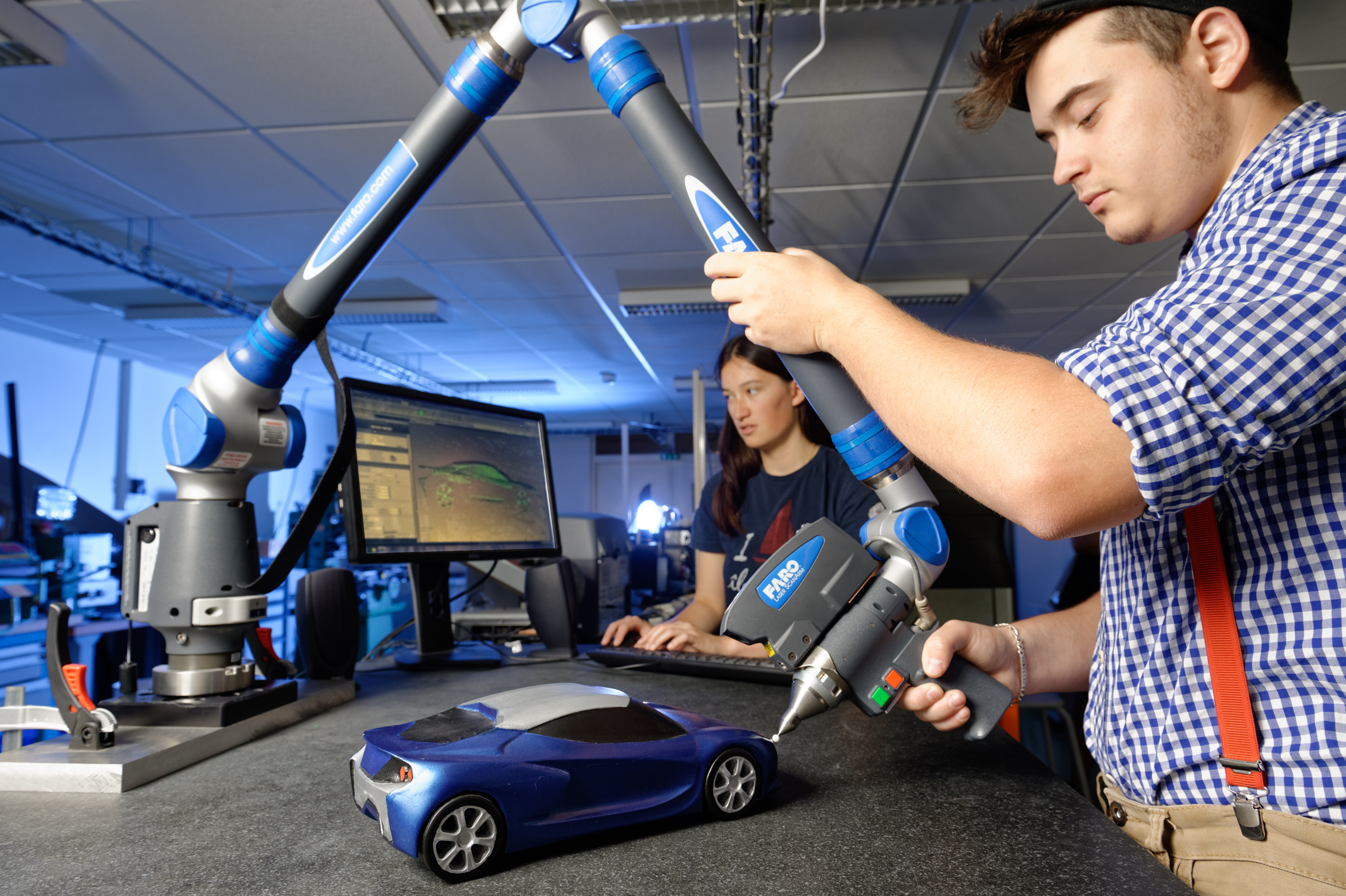
The program covers topics ranging from sensors and actuators to advanced control techniques, as well as numerical modeling, automation, mobile robotics, and real-time control systems—particularly in the field of energy management.
Students will develop multidisciplinary skills, combining mechanics, electronics, computer science, and telecommunications to meet the needs of Industry 4.0 and smart systems. A cross-disciplinary course in systems theory—common to the other tracks—will round out the program.
The UTBM’s ISC Master’s program is, by design, a highly interdisciplinary program that draws on the institution’s various areas of expertise. Students in the ISC Master’s program’s Robotics and Autonomous Systems track will take courses taught by faculty members specializing in mechanical engineering, electrical engineering, and computer science.
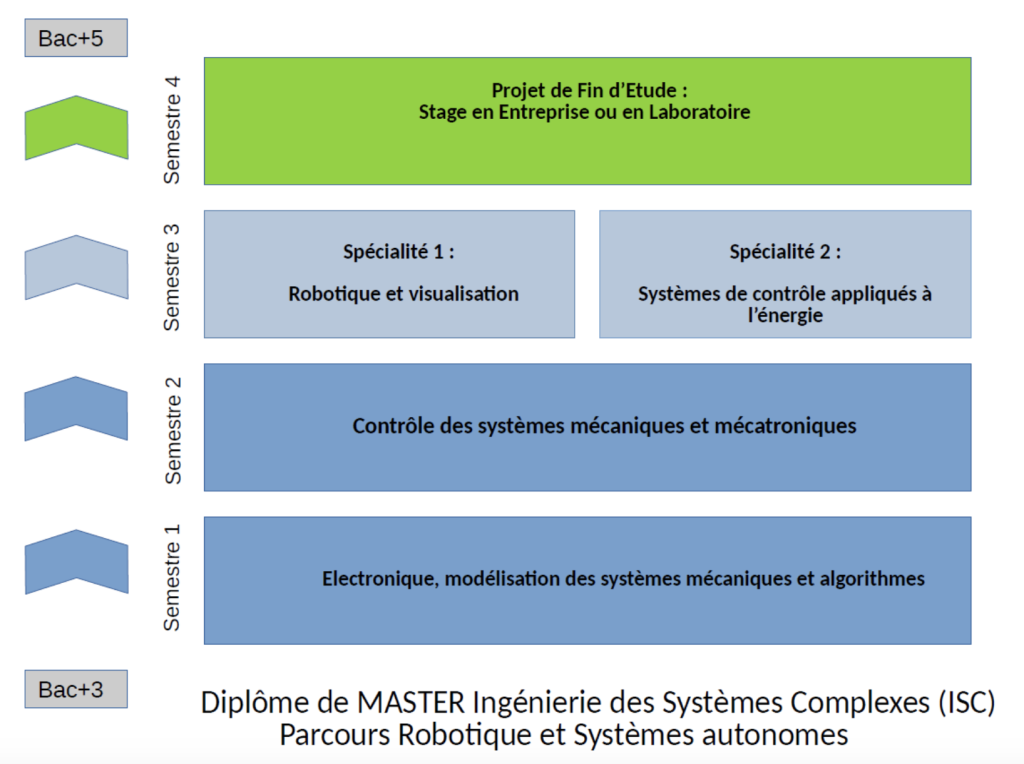
More specifically, the first semester is devoted to acquiring thefoundational knowledge necessary for coursework in algorithms, mechanical and electronic engineering, and modeling. The second semester focuses on thecontrol of mechanical and mechatronic systems, covering concepts such as sensors, actuators, and control processes. In the third semester, Master’s students can choose to specialize inrobotics and computer visionor incontrol systemsapplied to energy. The final semester is devoted to the capstone project, which can be carried out in a company or in a laboratory.
Throughout the three semesters at UTBM, students will work in project teams on assignments related to their academic disciplines. A cross-disciplinary course on systems theory and innovation in complex environments rounds out the core curriculum, along with language courses designed to help students achieve a certified B2 level in English or further their proficiency in another language if they have already attained the B2 level.
Rates
When should you apply?
There is only one start date per year: in SEPTEMBER.
There will be no start date in February 2025 for master’s programs.
For the M1 program:
National timeline for applying through the Mon Master portal – Applications must be submitted between February 25 and March 24, 2025.
For the M2:
Opening: November 15, 2024
Closing: June 30, 2025
Admissions Interviews: January through June 2025
Note: The M1 and M2 programs are open to continuing education students (contact: formation.continue@utbm.fr)
How do I apply?
If you live in France or in a foreign country that does not have a Campus France office, you must submit your application through the E-candidat platform.
Please read the app's User Guide before creating your application.
If you live in one of the following countries that has a Campus France office, you must apply through the Etudes en France app.
South Africa, Algeria, Saudi Arabia, Argentina, Armenia, Azerbaijan, Bahrain, Benin, Myanmar, Bolivia, Brazil, Burkina Faso, Burundi, Cambodia, Cameroon, Canada, Chile, China, Colombia, Comoros, Congo, South Korea, Ivory Coast, Djibouti, United Arab Emirates, Egypt, Ecuador, United States, Ethiopia, Gabon, Georgia, Ghana, Guinea, Haiti, Hong Kong, India, Indonesia, Iran, Israel, Japan, Jordan, Kenya, Kuwait, Lebanon, Madagascar, Malaysia, Mali, Morocco, Mauritius, Mauritania, Mexico, Nepal, Nigeria, Pakistan, Peru, Qatar, Central African Republic, Democratic Republic of the Congo, Dominican Republic, United Kingdom, Russia, Rwanda, Senegal, Singapore, Taiwan, Chad, Thailand, Togo, Tunisia, Turkey, Ukraine, and Vietnam.
Program
Semester 1 – Electronics, Modeling of Mechanical Systems, and Algorithms
Required courses:
Elective Courses:
Semester 2 – Control of Mechanical and Mechatronic Systems
Required courses:
Elective courses:
Semester 3 (34 ECTS) – Specialization
Two options are available, allowing students to specialize based on their interests.
Option 1: Robotics and Visualization
Required courses:
Elective courses:
Option 2: Control Systems Applied to Energy
Required courses:
Elective courses:
Semester 4 – Capstone Project: Internship at a company or in a laboratory (6 months)
Skills
The diploma
Text to add
Careers
Graduates will be qualified for positions as R&D engineers, project managers, consultants, or technical experts in the fields of robotics, automation, autonomous vehicles, embedded systems, and industrial telecommunications. They will be prepared to work in a variety of sectors, such as aerospace, automotive, energy, and Industry 4.0.
Research-based training also prepares graduates to pursue a doctoral degree in the field of robotics and autonomous systems.
Prerequisites: Expertise in your technical field related to your previous education (IT, manufacturing, mechanical engineering, and energy); ability to work independently; ability to work as part of a team; open-mindedness; organizational skills; curiosity and initiative; English proficiency (minimum B1 level for M1 / B2 level for M2); and French proficiency (minimum B2 level).
Advanced skills in mechatronics, computer science, and mathematics for admission to the M2 program.
Accessibility
Text to add
Master's Program Director