From the virtual world to transportation design, in May 2025, our students had the opportunity to attend classes and presentations given by professors from Canadian partner universities who were invited for the occasion.
Bob-Antoine J. MENELAS, fromUQAC, taught courses in the INFO program on the topic of virtual worlds and gave a lecture on May 26 in Belfort titled “A Sensory-Motor Approach to Human-Computer Interaction: Societal Applications of Virtual Environments.”
This presentation examines the central role of humans in virtual environments through the lens of three major societal issues: the prevention of accidental falls, post-traumatic care, and assistance for people with visual impairments. Drawing on the theoretical foundations of enaction and embodied cognition, it highlights the importance of sensory channels—particularly the haptic channel—in human-machine interaction.
First, the presentation explores how haptic feedback can be used to warn older adults of the risk of falling, taking into account the nature of the ground and their level of attention. Next, it introduces an innovative approach to action-centered exposure therapy (ACET), using virtual reality to help people with post-traumatic stress disorder indirectly confront situations similar to their trauma. Finally, it describes the development of a multifunctional smart cane for the blind, incorporating autonomous navigation, interactive gaming, and social connectivity.
This interdisciplinary study illustrates how immersive and multisensory technologies can improve quality of life and enhance the autonomy of individuals in situations of vulnerability.
He also took this opportunity to present the UQAC dual-degree programs available to our computer science students.
Steve VEZEAUis a professor atUQAM | Université du Québec à Montréal and directs the DESS program in Transportation Equipment Design. His interactions with students provided an opportunity to share an analysis of design professions, particularly from a North American perspective. Steve VEZEAU also had the opportunity to present UQAM’s programs, the DESS in Transportation Equipment Design, and his research activities.
Thank you to our two guests, as well as to Franck GECHTER, Director of International Relations, and Jean-Bernard BLUNTZER, Head of International Relations for the Mechanical Engineering and Ergonomics program.

From the virtual world to transportation design, in May 2025, our students had the opportunity to attend classes and presentations given by professors from Canadian partner universities who were invited for the occasion.
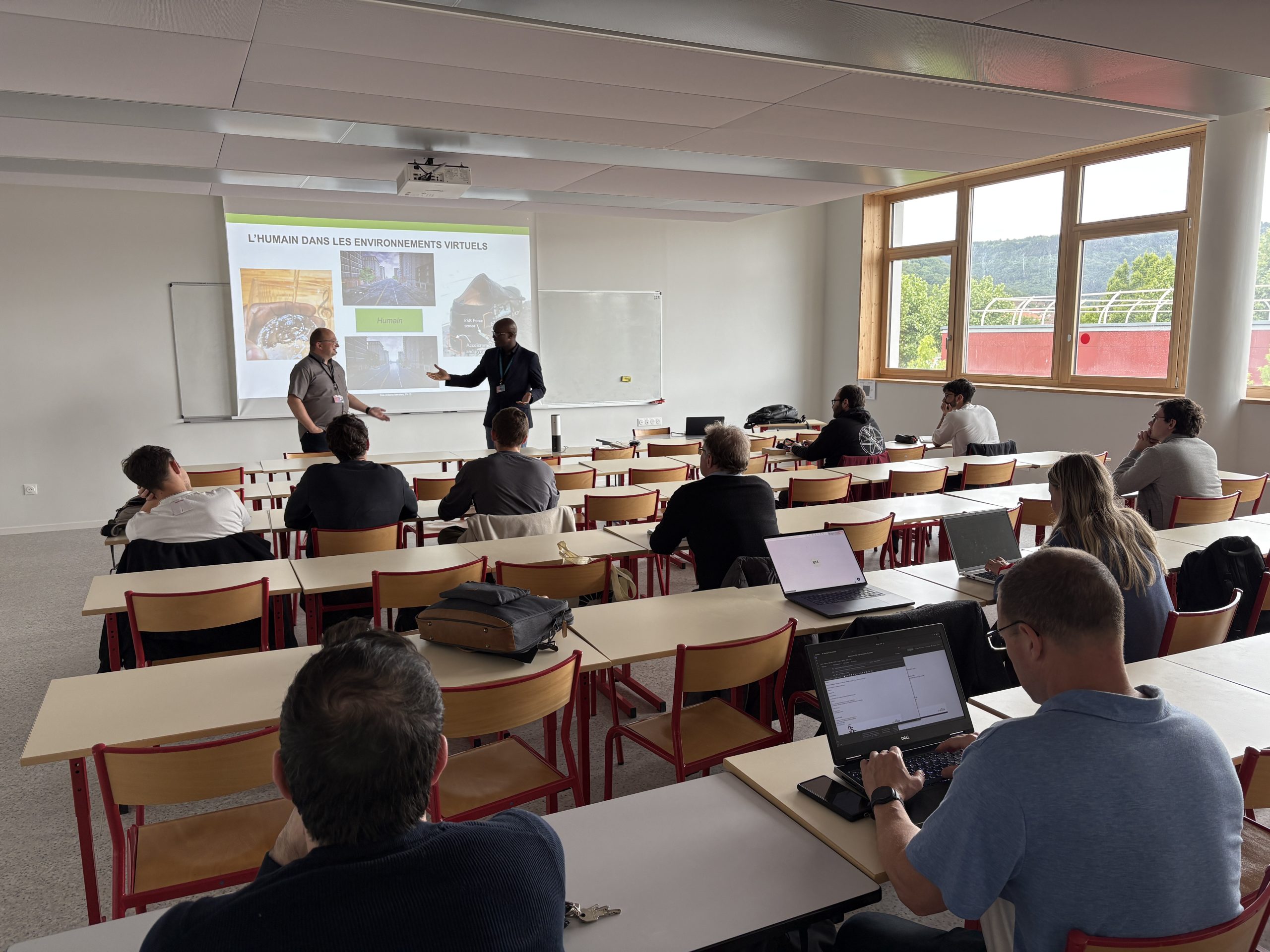
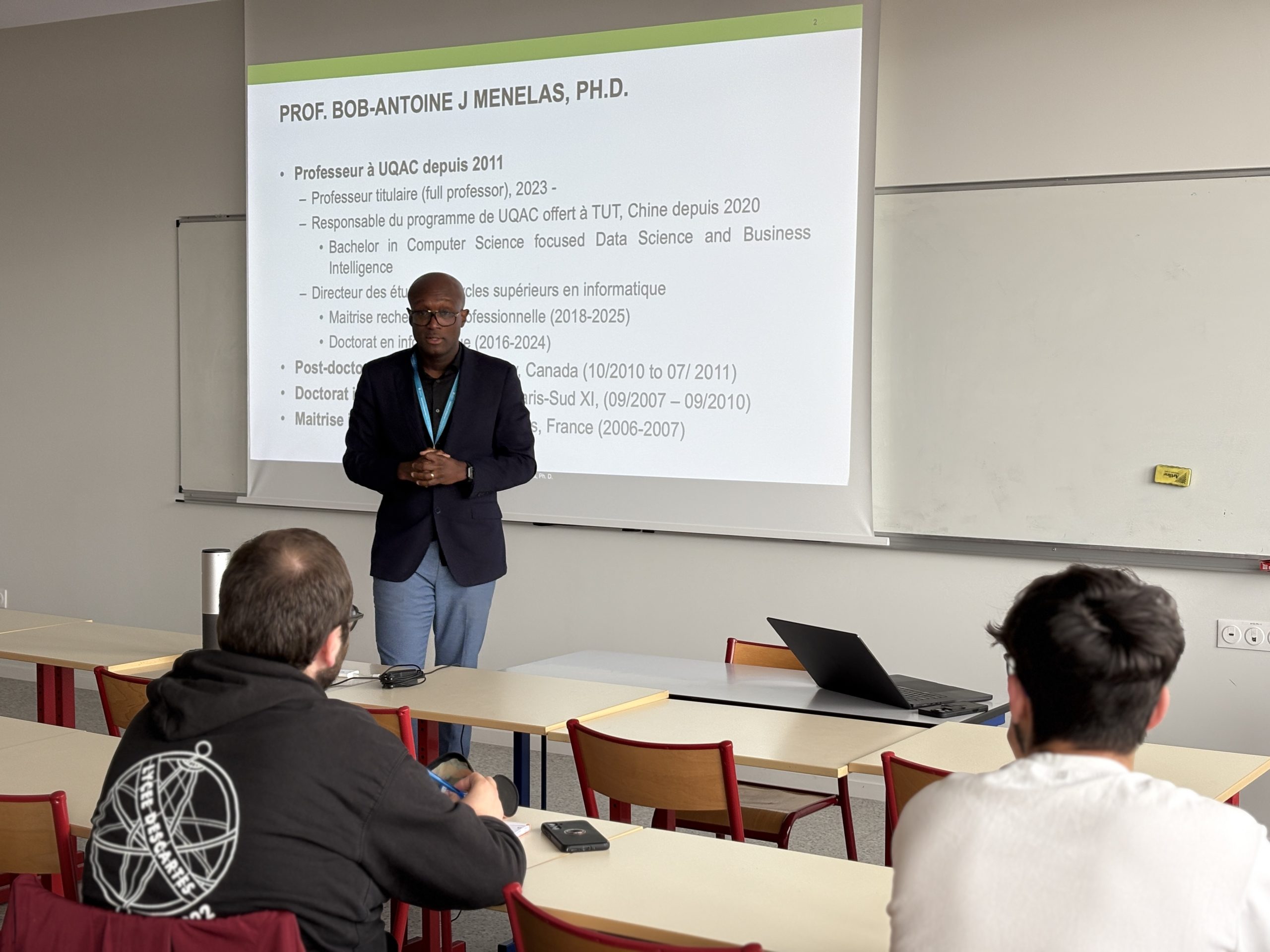
Bob-Antoine J. MENELAS, fromUQAC, taught courses in the INFO program on the topic of virtual worlds and gave a lecture on May 26 in Belfort titled “A Sensory-Motor Approach to Human-Computer Interaction: Societal Applications of Virtual Environments.”
This presentation examines the central role of humans in virtual environments through the lens of three major societal issues: the prevention of accidental falls, post-traumatic care, and assistance for people with visual impairments. Drawing on the theoretical foundations of enaction and embodied cognition, it highlights the importance of sensory channels—particularly the haptic channel—in human-machine interaction.
First, the presentation explores how haptic feedback can be used to warn older adults of the risk of falling, taking into account the nature of the ground and their level of attention. Next, it introduces an innovative approach to action-centered exposure therapy (ACET), using virtual reality to help people with post-traumatic stress disorder indirectly confront situations similar to their trauma. Finally, it describes the development of a multifunctional smart cane for the blind, incorporating autonomous navigation, interactive gaming, and social connectivity.
This interdisciplinary study illustrates how immersive and multisensory technologies can improve quality of life and enhance the autonomy of individuals in situations of vulnerability.
He also took this opportunity to present the UQAC dual-degree programs available to our computer science students.
Steve VEZEAUis a professor atUQAM | Université du Québec à Montréaland director of the DESS program in Transportation Equipment Design. His interactions with students provided an opportunity to share an analysis of design professions, particularly from a North American perspective. Steve VEZEAU also had the opportunity to present UQAM’s programs, the DESS in Transportation Equipment Design, and his research activities.
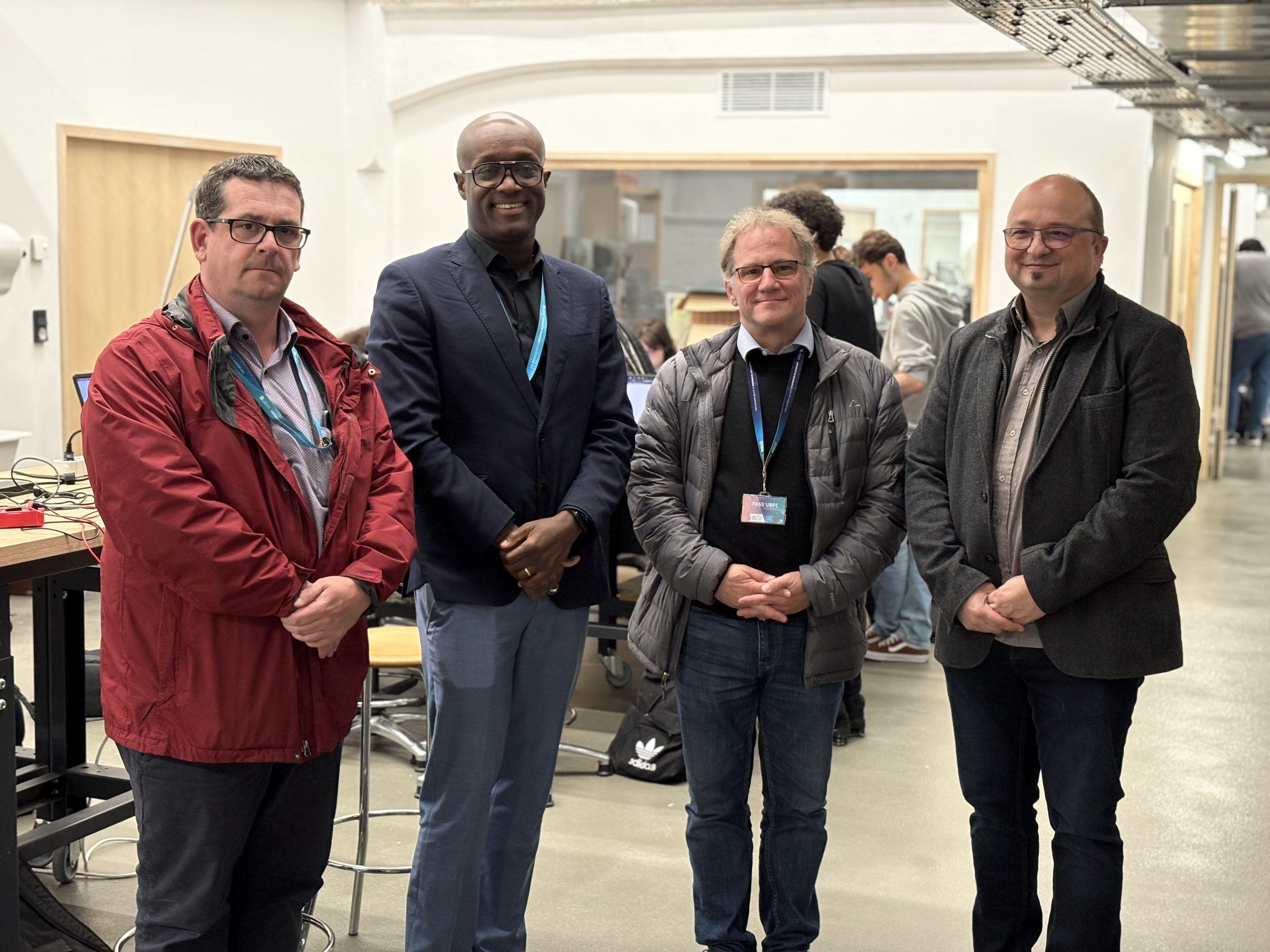
🙏 To our two guests, as well as Franck GECHTER, Director of International Relations, and Jean-Bernard BLUNTZER, Head of International Relations for the Mechanical Engineering and Ergonomics program.