Table of Contents

Engineering Specializations

UTBM trains engineers who are quickly ready for the workforce and particularly adaptable to technological advancements and societal changes. Its programs are grounded in research and commercialization.

specialties

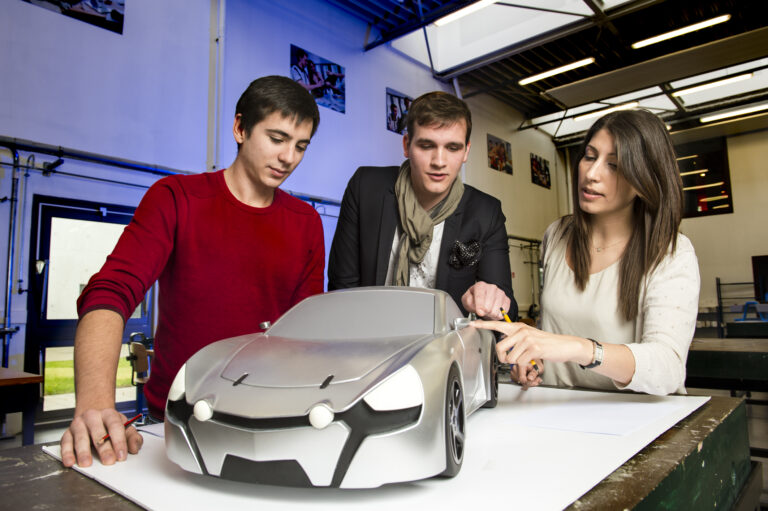
3 Sbarro students, gathered around a model car

Mechanics and Ergonomics

As a key player in the ongoing renewal of product lines—and thus in innovation—mechanical and ergonomics engineers (formerly known as EDIM) take into account the human being in all its dimensions—from muscles and bones to emotions—in their design and evaluation work, while incorporating the fundamentals of ergonomics, design, and sustainable development.

read more

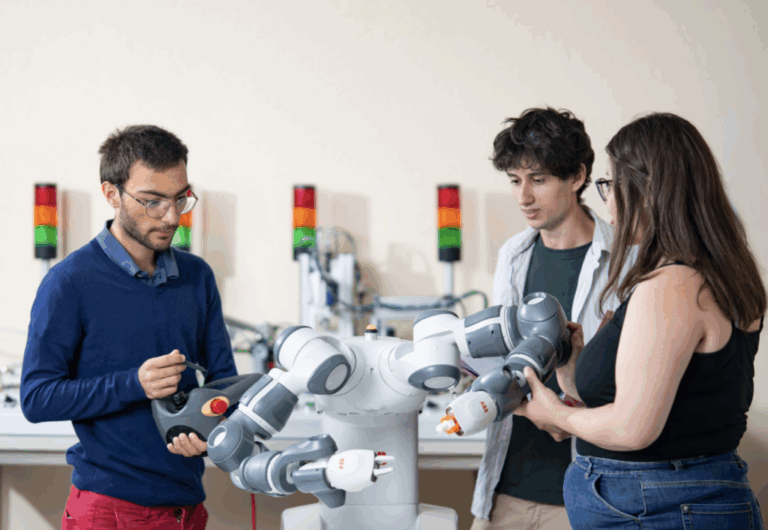
3 students working on a cobot

Industrial Engineering

Food processing, aerospace, automotive, watchmaking, luxury goods, energy, transportation, pharmaceuticals… Companies of all sizes and across all sectors agree on the profile of an industrial systems engineer: a hands-on professional capable of coordinating partners from all disciplines, drawing on a solid scientific foundation, a pragmatic approach, and a natural aptitude for teamwork.

read more

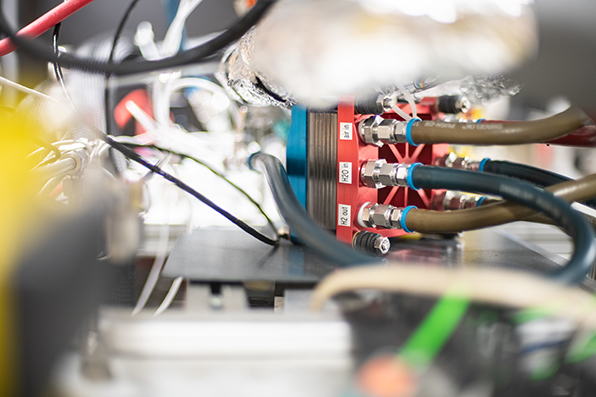
A close-up view of a hydrogen fuel cell surrounded by connected cables and hoses, with labels visible that read "air in," "H2O in," and "H2 out."

Energy and Electrical Engineering

Energy and the management of its environmental impacts are among the major societal challenges of the 21st century. Companies in this sector have a growing need for engineers trained in this broad field, which requires a wide range of skills.

read more

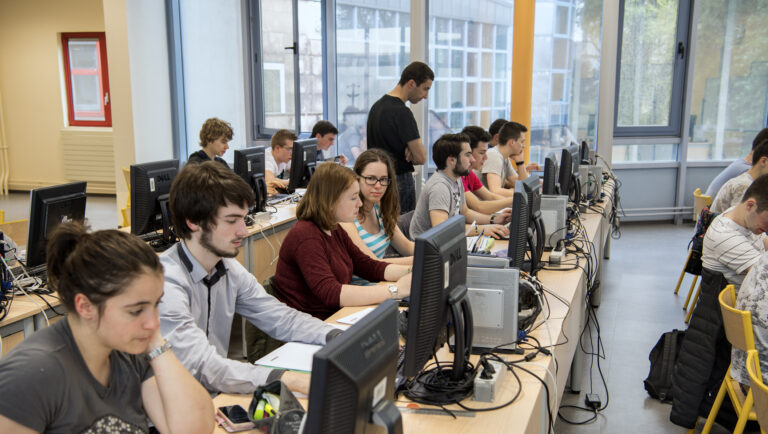
students in the computer lab

Computer Science

Industrial and service sector companies hire our engineers to manage and develop their information systems, products, and services. Some engineers focus on research and development (39%), while others embark on an international career path right from their first job (25%).

read more

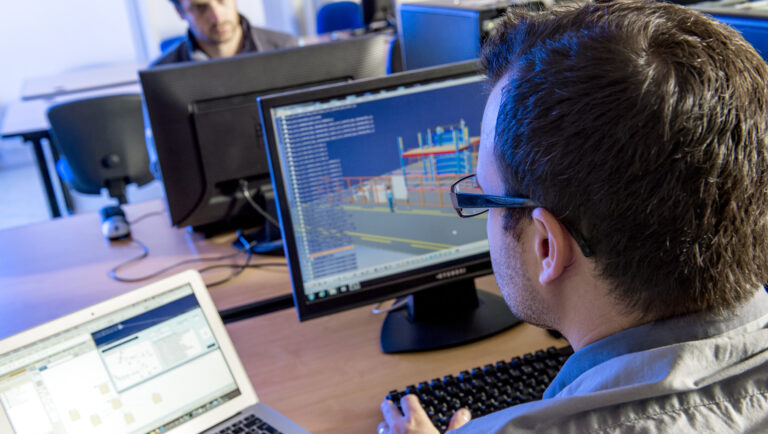
A man working on a computer

Mechanics

This program enables students to learn design methodologies using a new mechanical and digital engineering platform. Students can develop their knowledge and skills through product engineering projects carried out in collaboration with industry, research laboratories, and various institutional partners.

read more

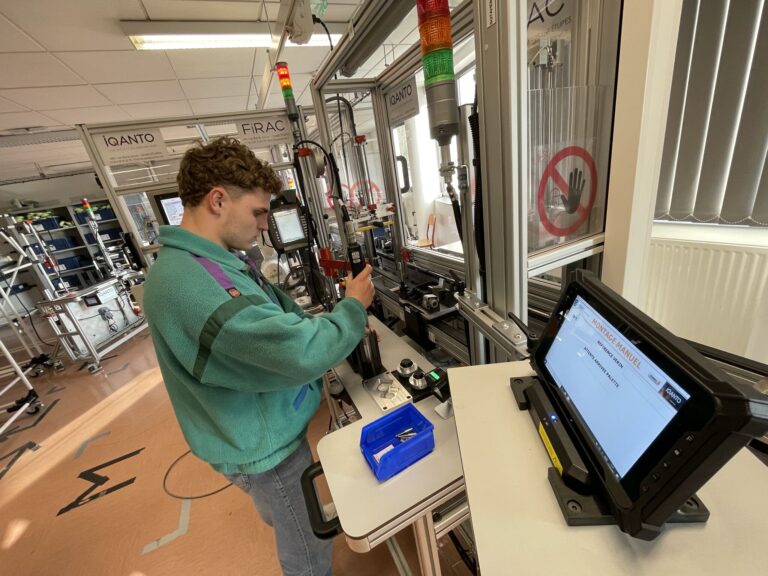
The image shows a young man working in a modern industrial workshop, a technology lab, or a technical training room. He is standing in front of an automated workstation and appears to be handling a tool or a mechanical part.

Industrial Logistics as an Apprentice

To organize, modernize, and optimize operations, and to provide the right product, in the right place, at the right time, to those involved in industrial processes.

read more

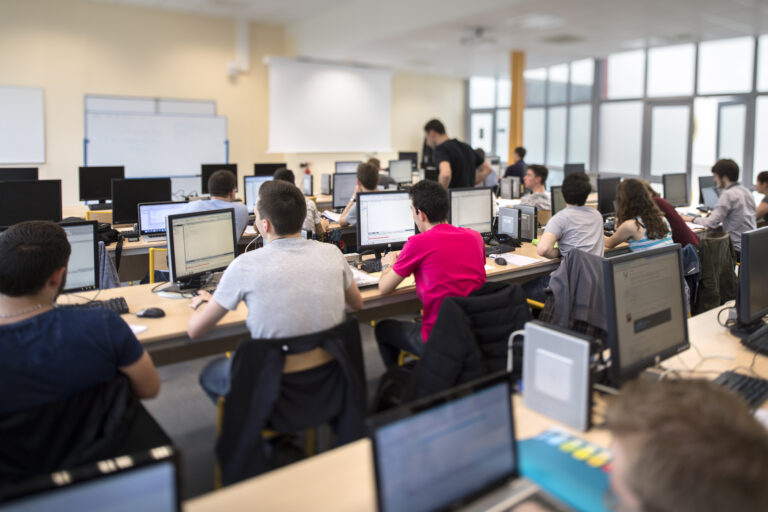
Students in a computer lab, seen from behind

IT Training Through an Apprenticeship Program

Information Systems Engineering: to design and manage complex computer systems, and to lead and manage IT projects.

read more

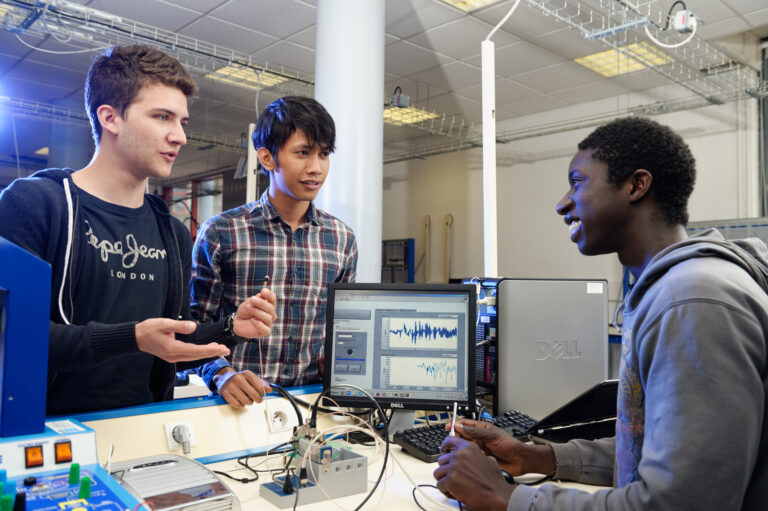
energy students

Energy and Electrical Engineering under the Apprenticeship Program

To design, size, simulate, and implement industrial electrical systems; manage industrial and R&D projects; and conduct tests, measurements, and trials.

read more

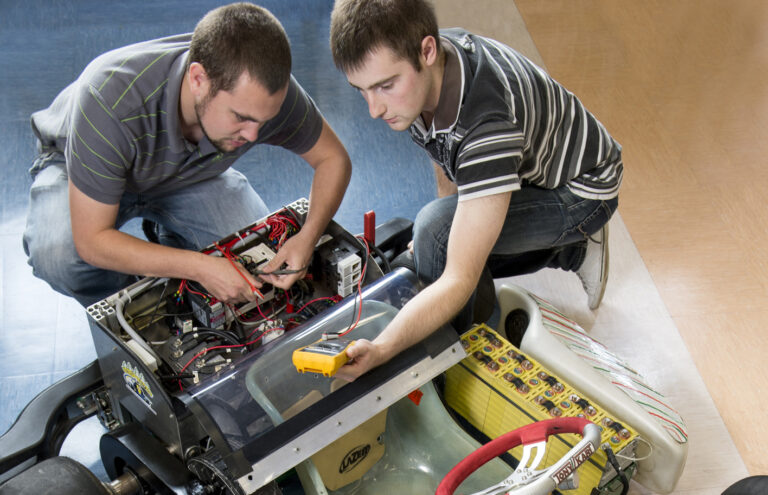
Two students working on the electrical circuit of a model car

Mechanical Engineering and Transportation (Apprenticeship Program)

Mechanical Design for Energy and Transportation: to design and size mechanical and mechatronic systems…

read more

Training Program

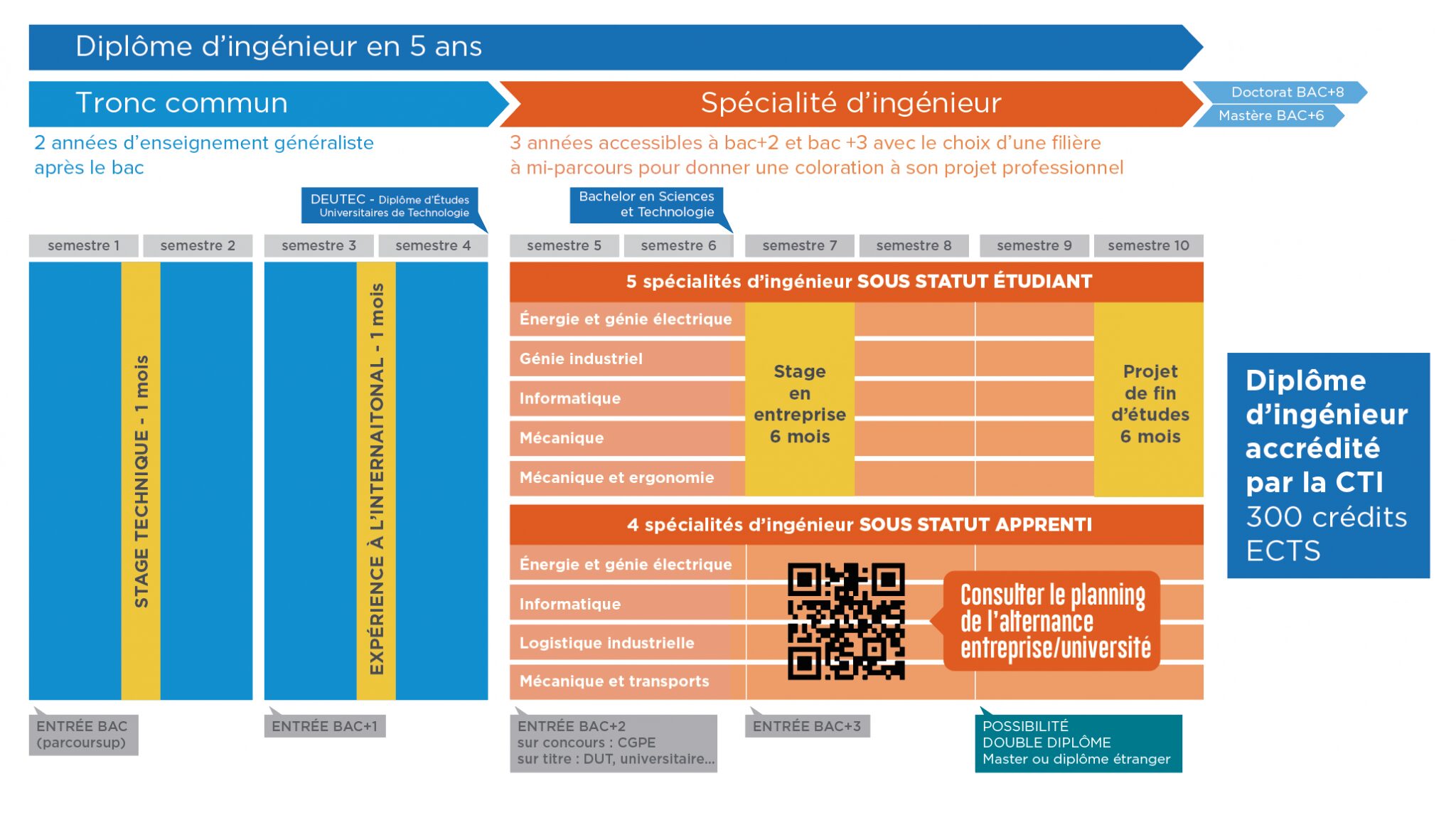
This diagram illustrates the structure of the degree program at UTBM leading to an engineering degree accredited by the CTI (Commission des Titres d’Ingénieur), equivalent to 300 ECTS credits.

The program is divided into two main phases: the core curriculum (2 years) and the engineering specialization (3 years).


The program spans 10 semesters (for a total of 5 years) following high school graduation:

  • Years 1 and 2 (Semesters 1 through 4): Core Curriculum (general education).

  • Years 3, 4, and 5 (Semesters 5 through 10): Engineering specialization.

  • After graduation: Students may continue on to a master’s degree (BAC+6) or a doctorate (BAC+8).


Core Curriculum (Semesters 1–4)

This period corresponds to two years of general education following high school graduation. It is marked by two major experiences:

  • Between Semester 1 and Semester 2 (for high school graduates): A 1-month technical internship.

  • Between the 3rd and 4th semesters (for students entering after one year of college): A one-month international experience.


Intermediate Degree: At the end of the fourth semester, students can earn the DEUTEC (Diplôme d’Études Universitaires de Technologie).


Engineering Specialization ( Semesters 5–10)
These three years are open to students with a two-year post-secondary degree (admitted through the CGPE entrance exam, based on a DUT or university degree) and to those with a three-year post-secondary degree.

Halfway through the program, students choose a track to shape their career path. An intermediate degree, the “Bachelor’s in Science and Technology,” is also awarded at the end of semesters 5 and 6.Students can choose between two enrollment statuses to pursue their specialization:
The 5 engineering specializations under the “STUDENT” status
: Energy and Electrical Engineering - Industrial Engineering - Computer Science - Mechanical Engineering - Mechanical Engineering and Ergonomics
The 4 engineering specializations under the “APPRENTICE” status
: Energy and Electrical Engineering - Computer Science - Industrial Logistics - Mechanical Engineering and Transportation

Internships and projects for students: Semester 7:
A 6-month corporate internship.

Semester 10: The 6-month final-year project (PFE). B. Visual note: For apprentices, a QR code links to the work-study schedule. 4. Transfer Pathways and Graduation Opportunities

Parallel Entry Points: It is possible to join the program at any stage: at the BAC+1 level, at the BAC+2 level (via competitive exam or based on qualifications), or at the BAC+3 level.

Dual Degree: Starting in the 8th semester, students have the option to pursue a dual degree (Master’s or foreign degree). [Insert your paragraph here]
Registration / Admissions

Rates

Application fee: €105(Decree of February 21, 2021, setting the application fee) – Freefor recipients of French government need-based scholarships for the 2024–2025 academic year.
Tuition: €618 per year (2024/2025 rate)– Freefor recipients of French government need-based scholarships.

Apply

Because the UTBM program is organized into semesters, it offers two start dates: one in February and one in September.

The Group of Technology Universities (UTBM, UTC, UTT) has a common admissions process.
There is a single application form.
Selection is based on the application and an interview*(*depending on academic records and our capacity to accommodate applicants at the time of the interview).

Back-to-SchoolFebruarySeptember
Application Submission Sitewww.groupe-ut.fr
Website LaunchOctober 1 through November 15January 20 through March 20
Interviews (remote)
from mid-November to mid-DecemberFrom late February to mid-May
Results late Decemberlate May

To apply for the engineering program, you must hold or be about to receive a degree from a French or foreign institution of higher education:

  • CPGE, BUT, Bachelor's Degree, BTS

Before proceeding, we encourage you to review the list of eligible degrees to verify that your degree qualifies you to apply for our engineering programs.

  • Two years of immersion, observation, and preparation to help you choose your major more effectively
  • An engineering culture that’s present from the very start of your program
  • A solid education in science, technology, and the humanities
  • An Introduction to the Industrial World Starting in the First Grade
  • Students can gain international experience as early as their second year of study through an internship or a semester abroad
  • The assurance that you will be able to enter the specialty of your choice upon completion of the core curriculum

Text to add

Text to add

internships

Long-term internships

Two 24-week internships at companies in France or abroad:

  • aprofessional internship(ST40) during the third semester of the engineering program
  • afinal-year project(ST50) in the 6th semester of the engineering program

These are two key milestones in your education.
The final project is very often a stepping stone to your first job: it must therefore be part of a well-thought-out personal plan.

Innovative Industrial Project (P2I)

As part of certain course units, students may be required to carry out a project in collaboration with a company or an external organization. If they are required to visit the company (discuss this with the instructor responsible for supervising the course unit), they must have the department office associated with the course unit they are taking draw up a P2I internship agreement covering them. The actual time spent at the company may not exceed the individual limit set by the THE schedule mentioned in the Course Units Guide.

Companies Supporting Students

At UTBM, the academic year is punctuated by career fairs, technical conferences, and other themed events. And beyond these group events, every student has ongoing opportunities to connect with managers or UTBM alumni who can help them shape their career plans.

Innovation: Crunch Time

For four days, you will work in multidisciplinary, multi-level project teams on topics proposed by our industry partners.

A Stepping Stone to Employment

At UTBM, the BAIP (Office for Career Placement) serves as the link between students and companies.
Its network of 3,000 companies facilitates productive connections.

our strengths