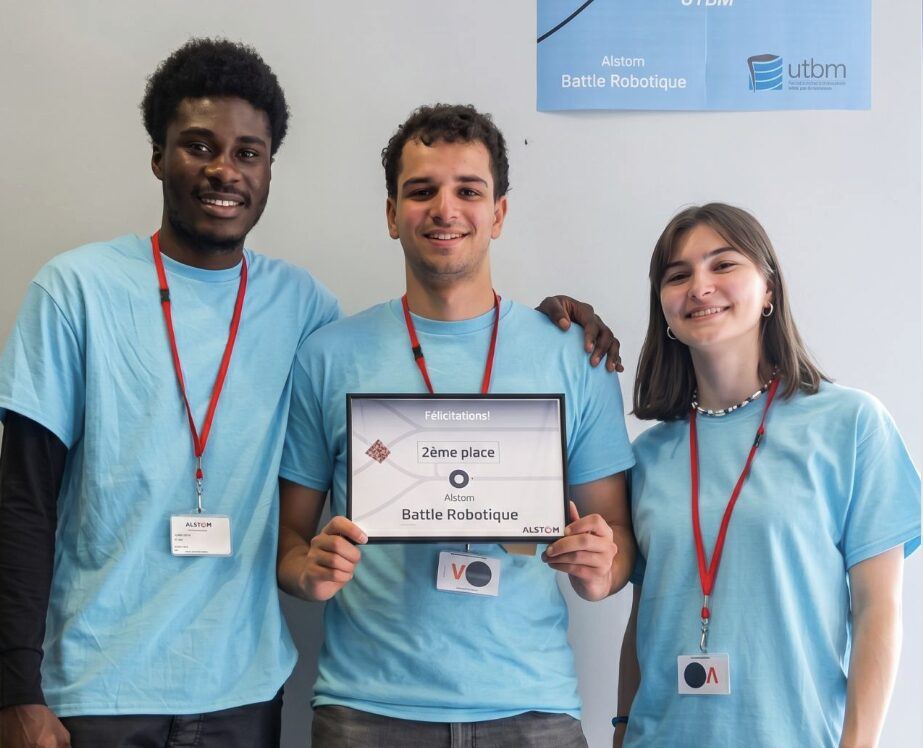
This is a question that is difficult—and sometimes tedious—to answer within the traditional classroom setting. Thinking outside the box is precisely what defines UTBM, with unique educational formats like Crunch Time, which is now being exported internationally.
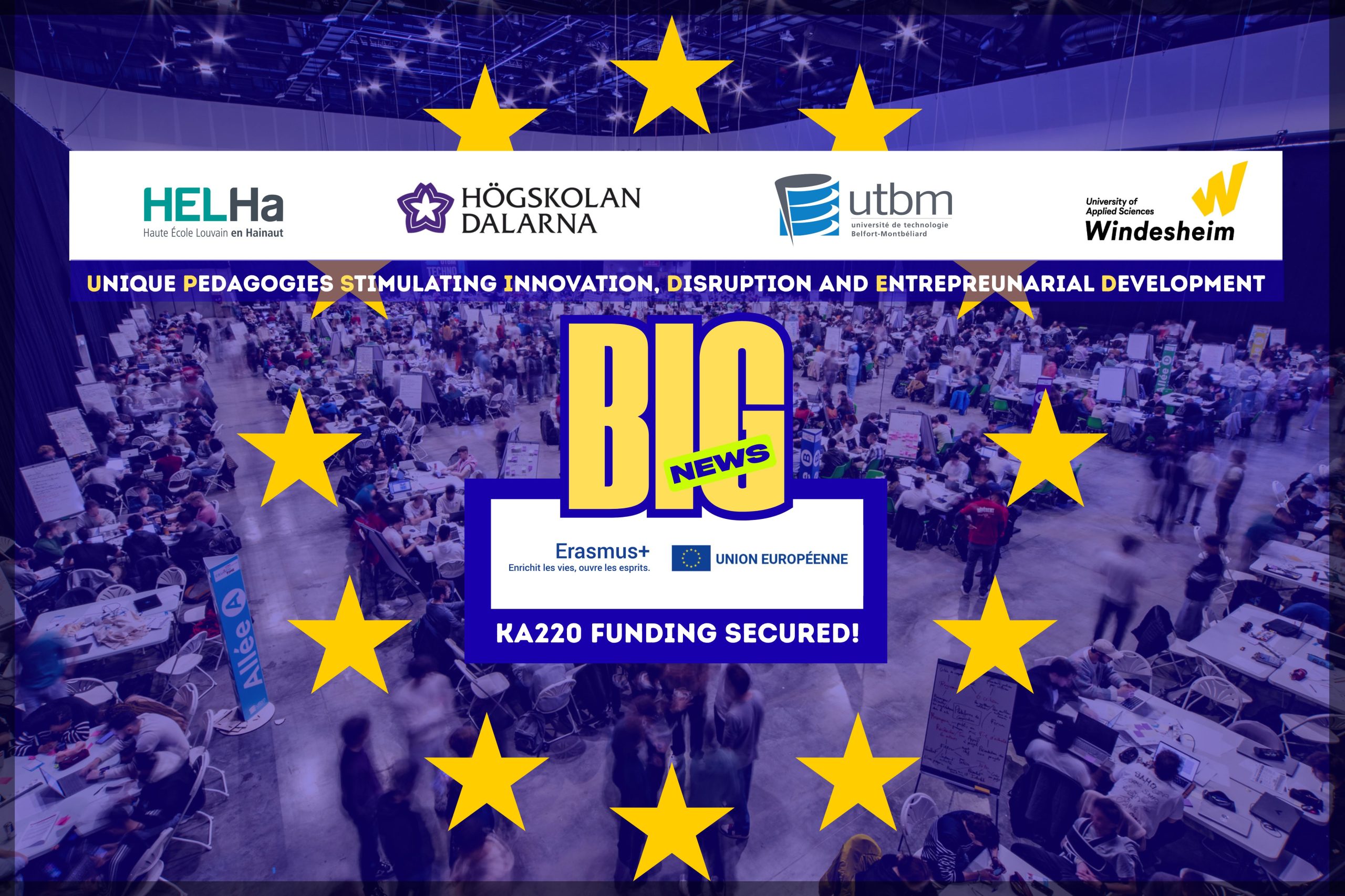
Just before the summer break, we were delighted to learn that we had earned the “Bienvenue en France” certification (congratulations again to the teams!), and since good news never comes alone, we’ve just learned that we’ve been awarded the maximum ERASMUS AC-220 grant.
AC-220—What is it?
Key Action 220 (or “Key Action 220” in the language of Shakespeare) is one of the types of projects funded by the ERASMUS+ program in the field of higher education to support cooperation among institutions, associations, businesses, NGOs, local governments, and others through innovative, collaborative, and transnational projects.
These cooperative partnerships are designed to enable organizations to improve the quality and relevance of their activities by developing and strengthening their network of partners.
The goal is to give them the opportunity to expand their activities internationally, exchange ideas, and develop new methods and practices by comparing and contrasting ideas.
Objective: To collectively explore innovative educational formats and lay the groundwork for a model that can be shared internationally.
Each partner university found itself facing the same question: How do we teach innovation? This is a question that is difficult to answer within the traditional classroom setting. Each university therefore tried different approaches to rethink its teaching formats. At UTBM, this reflection gave rise to “Crunch Time”; elsewhere, other experiments emerged.
It was this shared desire to explore possibilities that sparked a collective dynamic: pooling our experiences, comparing our practices, and collaboratively developing a format adaptable to different contexts, including on an international scale.
To make this ambition a reality, it quickly became clear that securing funding was essential. Pauline DOXIN, Franck GECHTER, and Olivier LAMOTTE therefore worked with our European partners to apply for a European grant. This project was a collaborative effort spanning several months, involving in particular:
-
- Dalarna University and Dalarna Science Park
John Are MYHREN, Associate Professor of Building Technology and Head of the Building Technology Program at Dalarna University, and Jacob ODE, Project Manager at Dalarna Science Park.
Our efforts paid off: we were notified in mid-July 2025 that we had been awarded the maximum grant.
Huge congratulations to them and to everyone who contributed to this success!
We are now embarking on three years of teamwork, with an initial phase devoted to analyzing and comparing existing models, before moving on to practical, larger-scale experiments.
In practical terms, this project will enable our students to have an immersive educational experience that is more inclusive, more environmentally responsible, and rooted in an international context.
See you in three years to discover together what this collective adventure will have brought to light: perhaps a new way of teaching innovation, born of creativity and European cooperation!